Canadian Provincial Birds: The Official Bird of Every Province and Territory
Maybe you spotted a loon on an Ontario road sign, or a puffin on a Newfoundland souvenir, and wondered which bird your own province actually claims. Every one of the Canadian provincial birds says something about the landscape it represents, from dancing prairie grouse to a nearly pure-white Arctic ptarmigan. This guide covers the official bird of all ten provinces and three territories, with quick identification tips, where to find each one, and the best season to go looking.
Quick Reference: All 13 Official Birds
| Province / Territory | Official Bird | Best Season to Spot |
|---|---|---|
| British Columbia | Steller's Jay | Year-round, easiest in winter |
| Alberta | Great Horned Owl | Year-round, vocal in late winter |
| Saskatchewan | Sharp-tailed Grouse | Spring (courtship leks) |
| Manitoba | Great Grey Owl | Winter |
| Ontario | Common Loon | Late spring to summer |
| Quebec | Snowy Owl | Winter |
| New Brunswick | Black-capped Chickadee | Year-round |
| Nova Scotia | Osprey | Spring to early fall |
| Prince Edward Island | Blue Jay | Year-round |
| Newfoundland and Labrador | Atlantic Puffin | Late spring to summer |
| Yukon | Common Raven | Year-round |
| Northwest Territories | Gyrfalcon | Year-round, more open in winter |
| Nunavut | Rock Ptarmigan | Year-round |
Western Canada
British Columbia: Steller's Jay
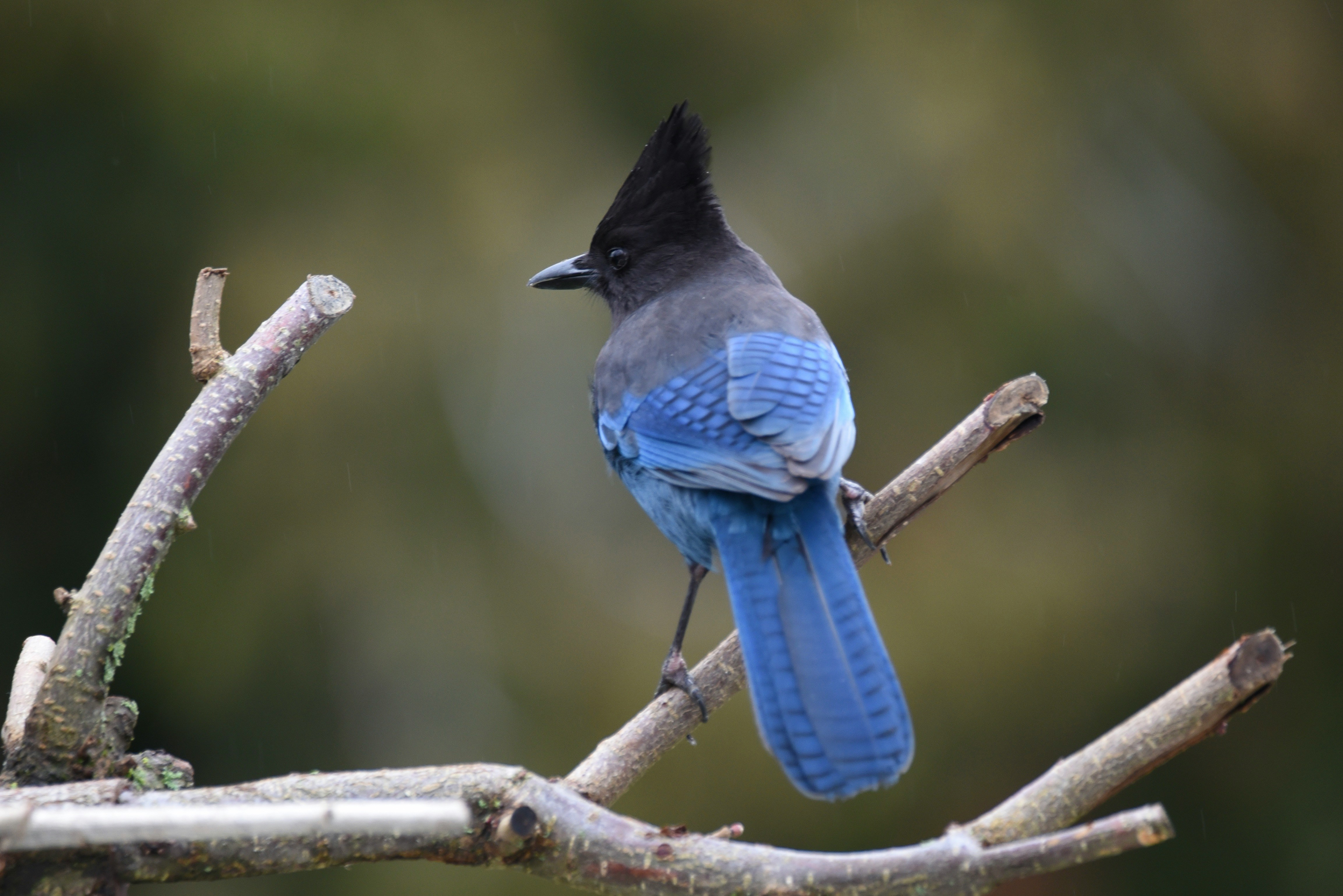
The Steller's Jay has a deep blue body, a sooty black head, and a tall pointed crest it raises and lowers with its mood. It is darker and noisier than the eastern Blue Jay, with a harsh, scolding call that carries through the forest. Watch for it in coniferous and mixed woods, including campgrounds and feeders, in spots like Stanley Park in Vancouver and the forests of Vancouver Island. It is a year-round resident and tends to be easiest in fall and winter when it drops to lower elevations and visits backyard feeders.
Alberta: Great Horned Owl
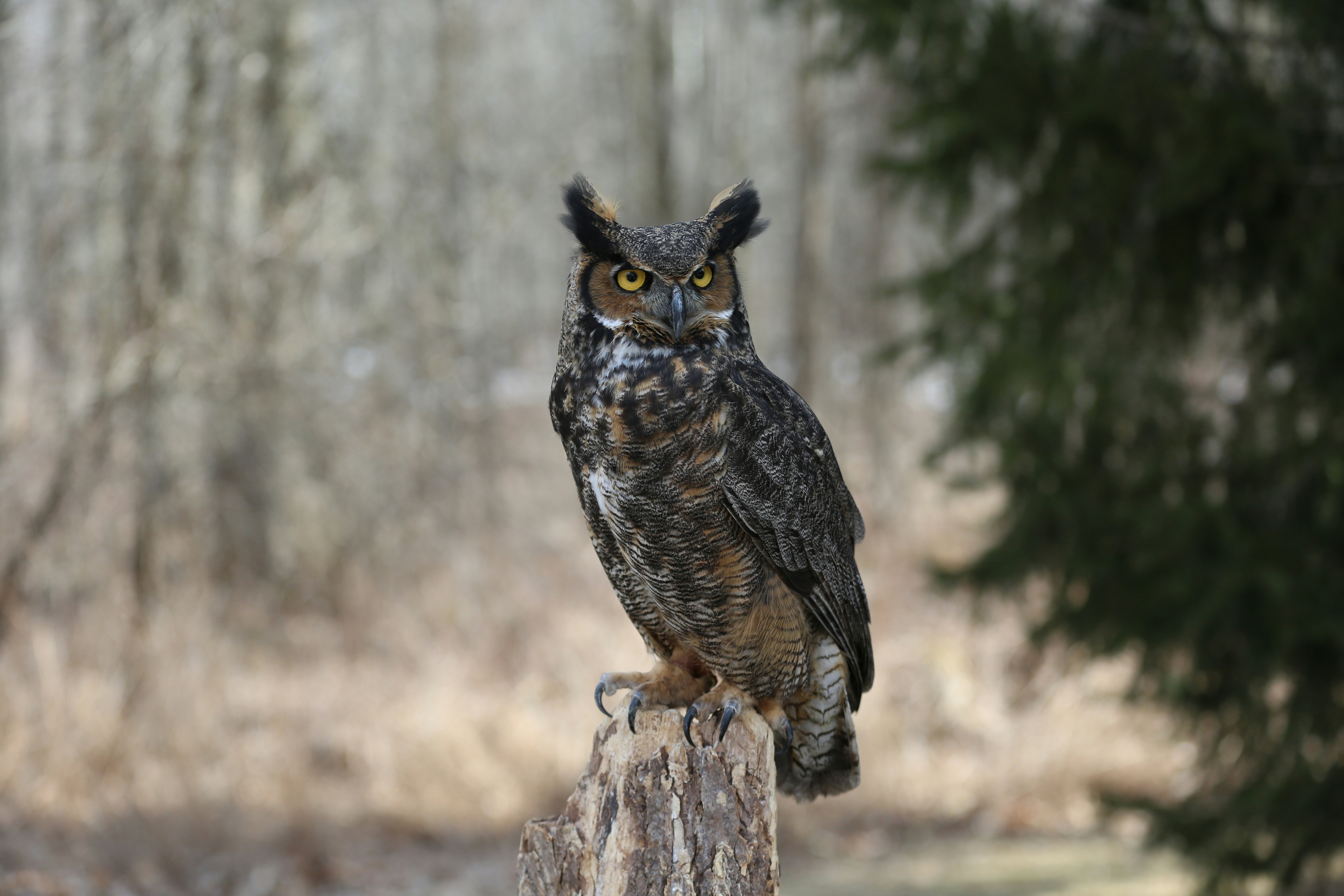
Alberta's bird is a large, powerful owl with prominent feathered ear tufts, mottled grey-brown plumage, a white throat patch, and striking yellow eyes. Its deep, soft series of hoots is one of the most recognisable night sounds in the country. It is remarkably adaptable, living in boreal forest, river valleys, and even city green space such as Edmonton's river valley and Calgary's Fish Creek Provincial Park. You can find it year-round, but it is most vocal in late winter when pairs claim territory and nest early, often before the snow melts.
Saskatchewan: Sharp-tailed Grouse
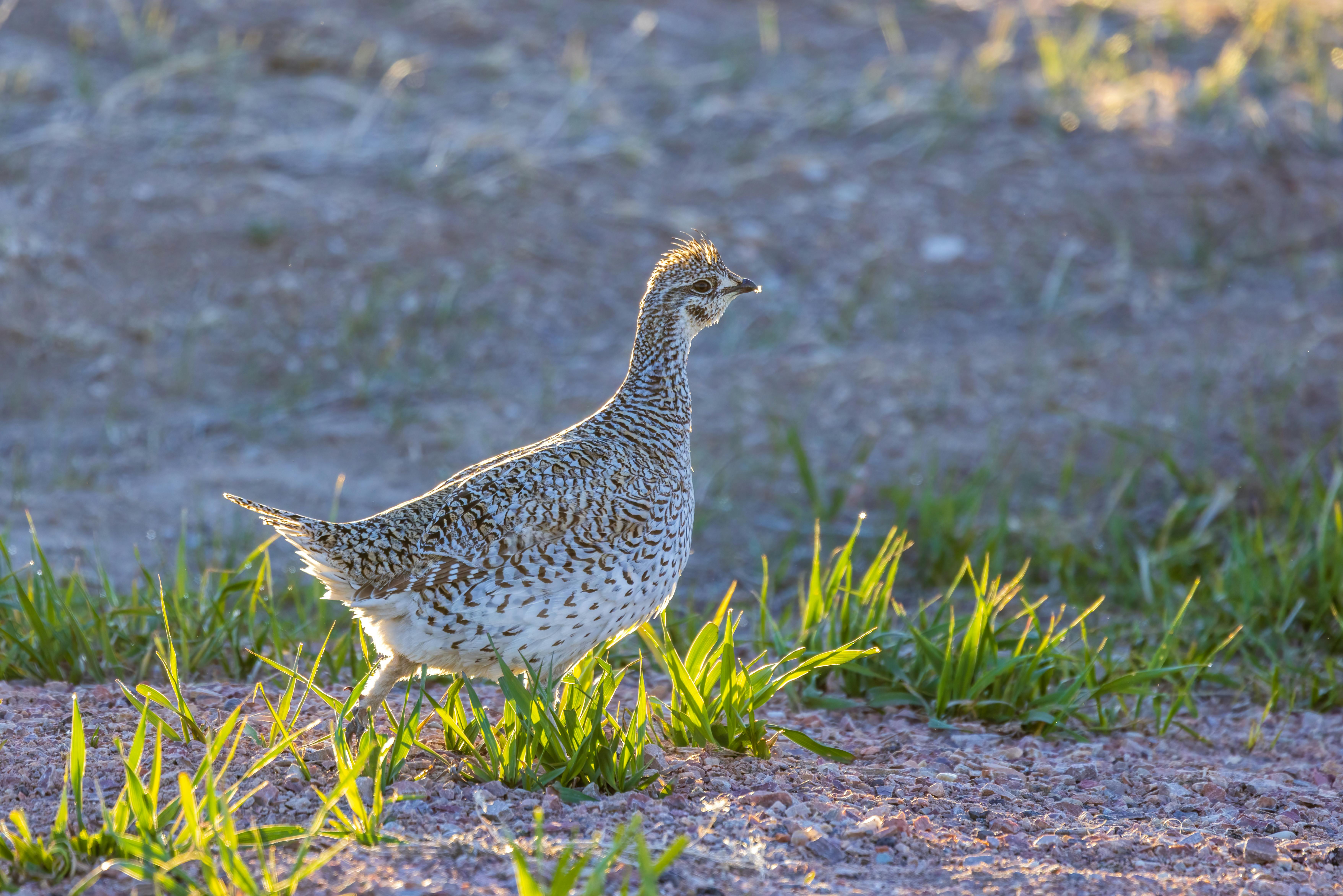
Saskatchewan was the first province in Canada to name an official bird, choosing the Sharp-tailed Grouse back in 1945. It is a medium, mottled brown ground bird with a short pointed tail edged in white and a small yellow comb above the eye. In spring, males gather on traditional dancing grounds called leks, inflating purple neck sacs and stamping their feet in a rapid courtship display. Look for them in native prairie and grassland, including Grasslands National Park in the south, and visit at dawn in April and May for the best chance at the dance.
Manitoba: Great Grey Owl
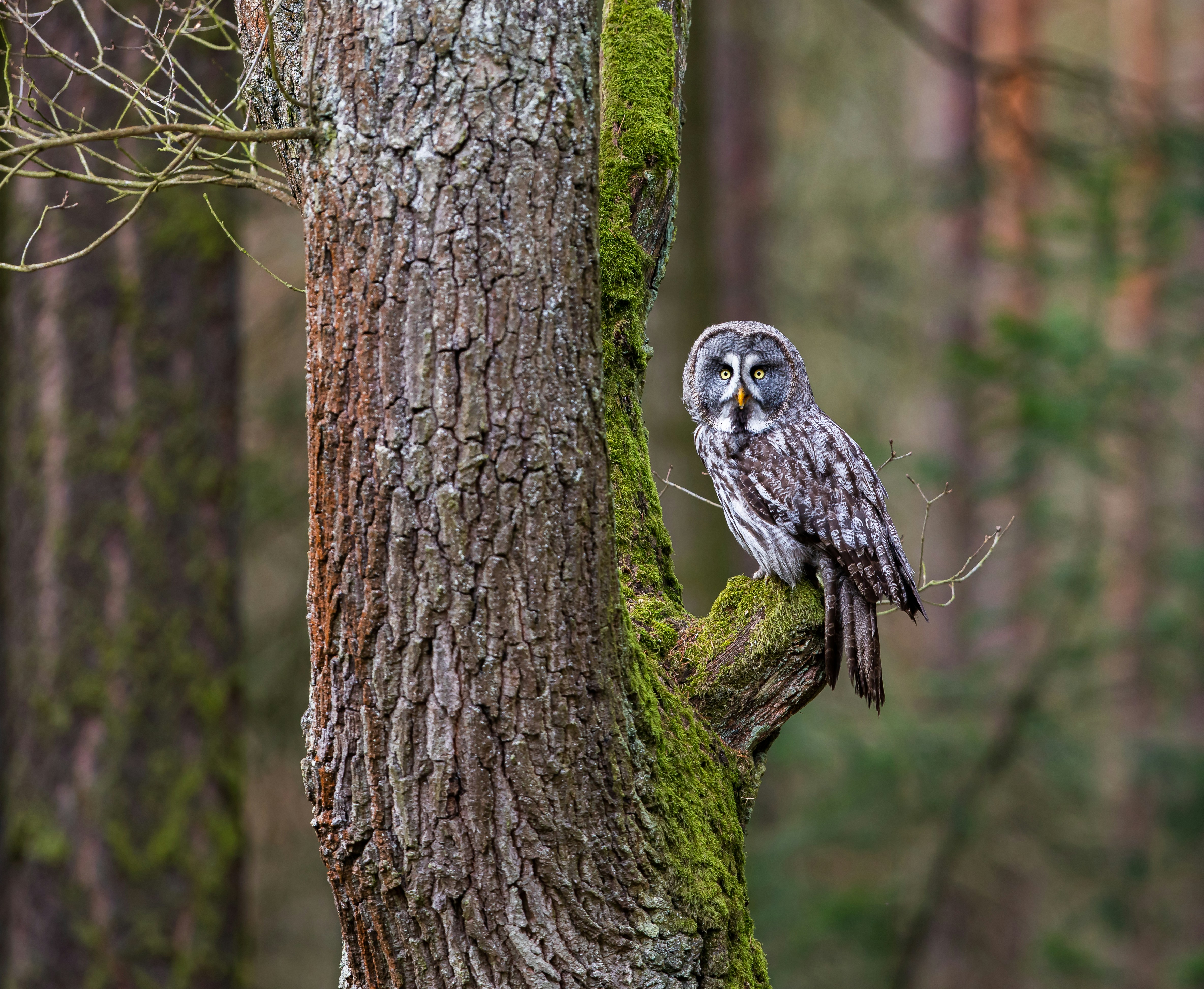
The Great Grey Owl is one of North America's largest owls by length, with a huge rounded grey facial disc, small yellow eyes, and no ear tufts. Much of that bulk is feathers, which keep it warm through brutal boreal winters. It hunts from low perches along forest edges and clearings, and is found across northern and central Manitoba. Winter is the best time to look, when the owls move to roadsides and forest margins and often perch in plain view during daylight.
Central Canada
Ontario: Common Loon
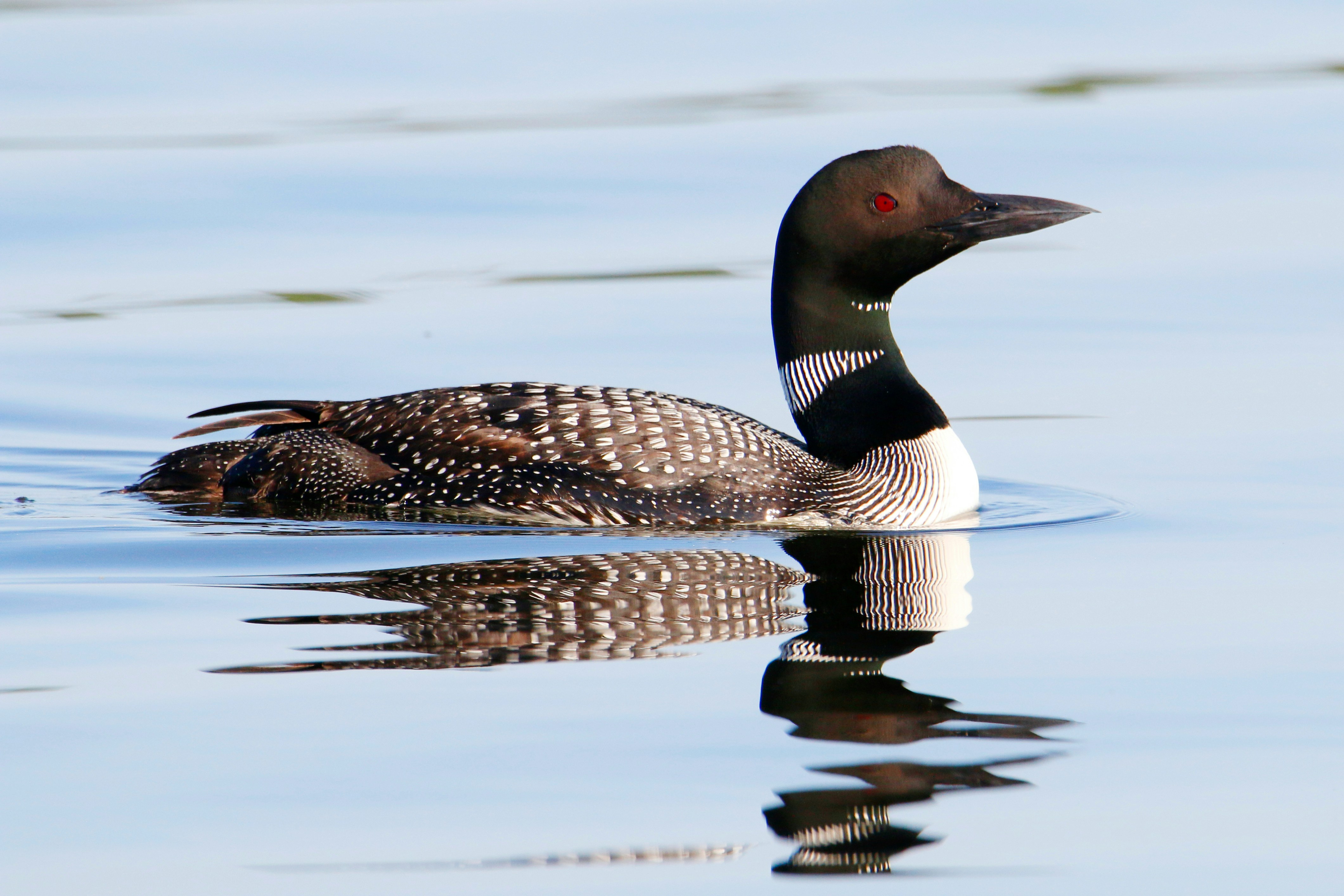
Few sounds say "northern lake" like the wail of a Common Loon. In breeding plumage it has a glossy black head, deep red eyes, a heavy black dagger of a bill, and a crisp black-and-white checkered back. It is an expert diver but almost helpless on land, so it nests right at the water's edge. Clear lakes and rivers across the province hold them, including Algonquin Provincial Park and the Muskoka lakes, from late spring through summer until the ice pushes them out.
Quebec: Snowy Owl
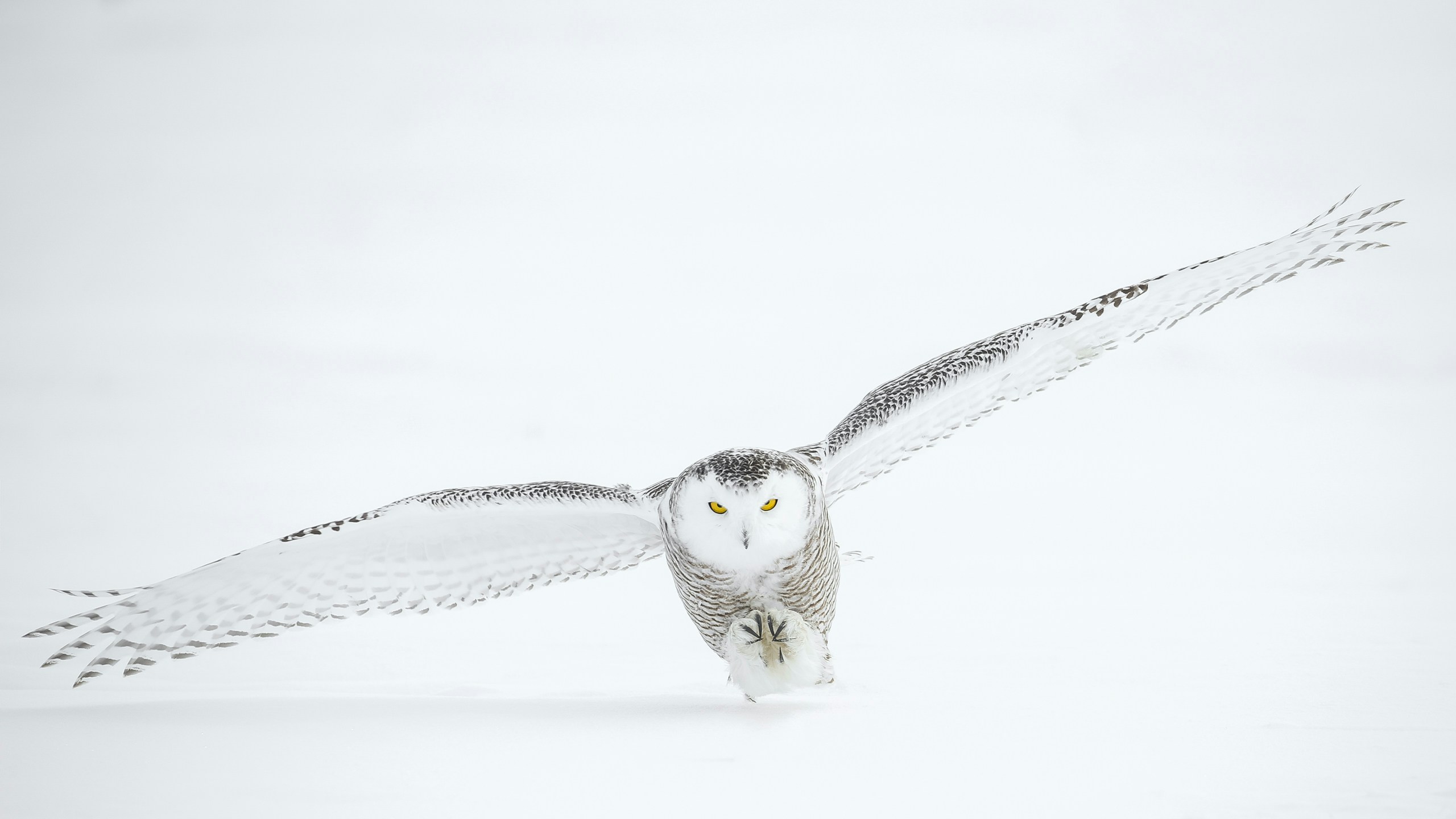
Quebec adopted the Snowy Owl in 1987 as a symbol of wildlife conservation. It is a large, mostly white owl with a smoothly rounded head and bright yellow eyes, though females and young birds show heavy dark barring while old males can be nearly pure white. In winter it hunts open country, so scan farm fields, shorelines, and fence posts across the agricultural plains near Montreal and the St. Lawrence lowlands. Numbers swing from year to year, and in irruption winters they appear much farther south than usual.
Atlantic Canada
New Brunswick: Black-capped Chickadee
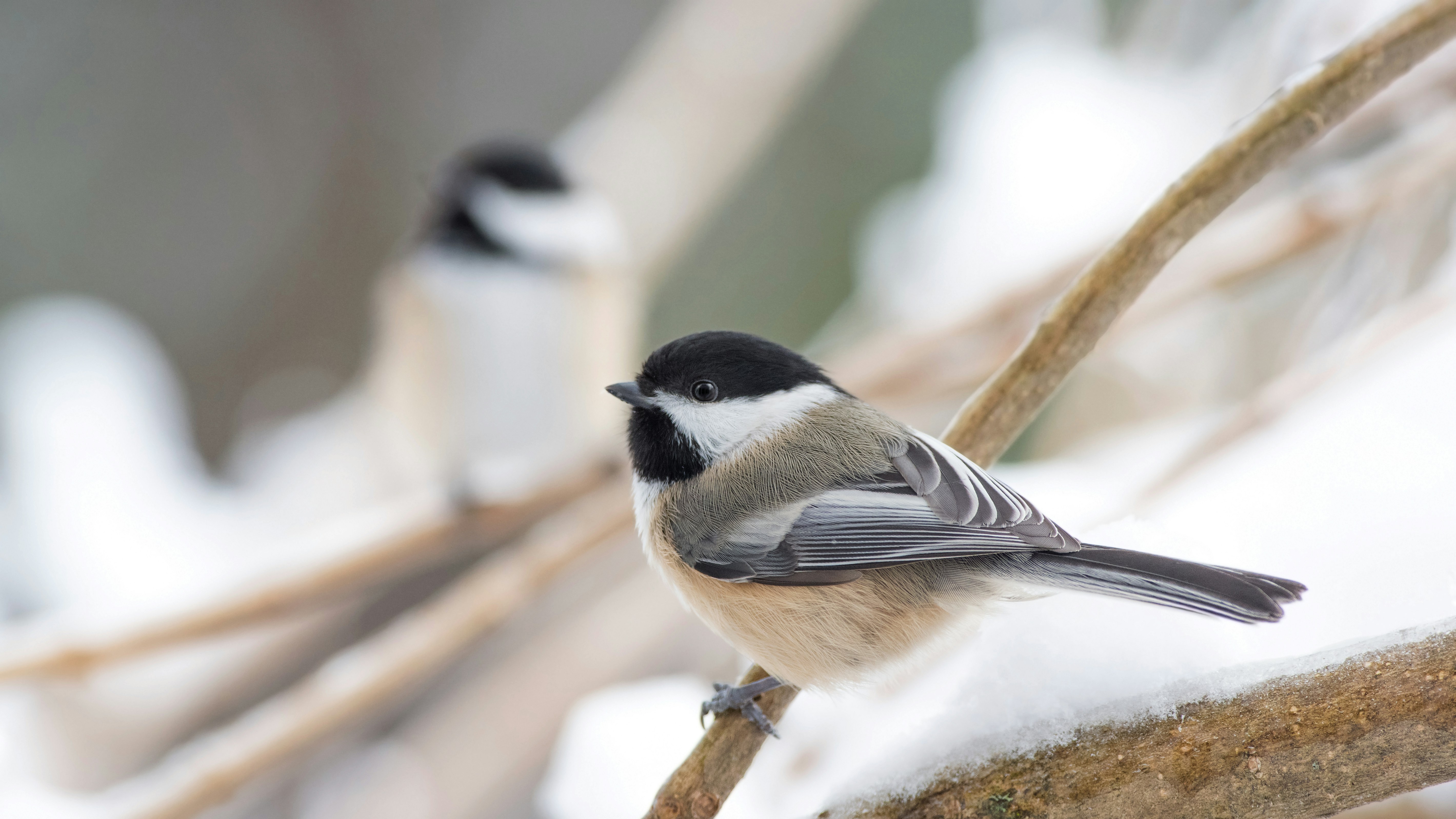
The Black-capped Chickadee is a tiny, round songbird with a black cap and bib, white cheeks, a grey back, and soft buff sides. Its cheerful chick-a-dee-dee-dee call gives the bird its name, and it is famously bold around people. You will find it in mixed and deciduous woods, on trails in places like Fundy National Park, and at nearly any backyard feeder in the province. It is a year-round resident and one of the easiest birds to attract, especially in winter when feeders draw it in close.
Nova Scotia: Osprey
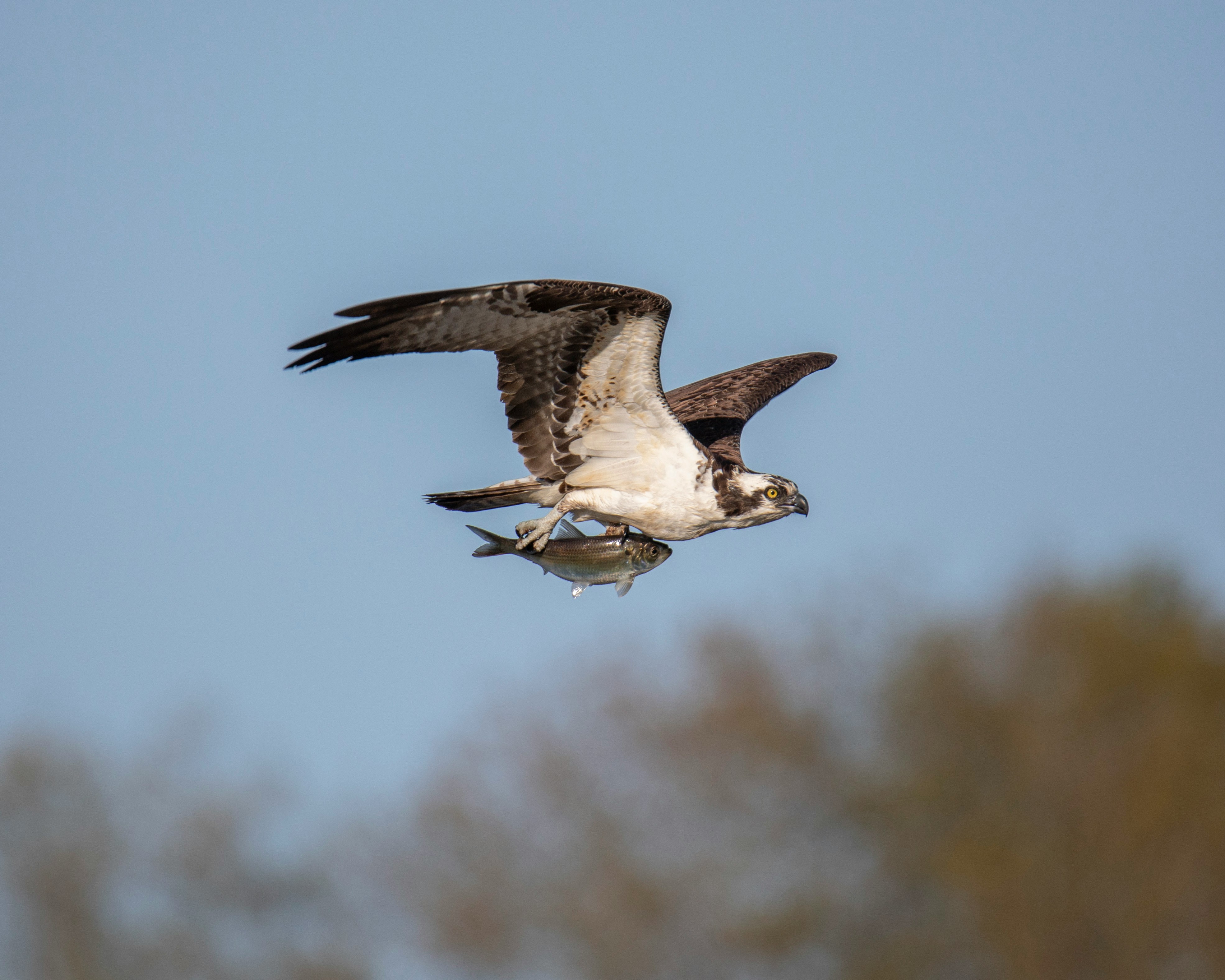
Nova Scotia's bird is a large fish-eating raptor, brown above and white below, with a white head crossed by a dark stripe through the eye. In flight, its wings show a distinctive crook, and it hunts by hovering before plunging feet-first to grab fish. Coasts, lakes, and rivers across the province all hold ospreys, and they readily nest on poles and purpose-built platforms. Look for them from spring through early fall, since they migrate south for the winter.
Prince Edward Island: Blue Jay
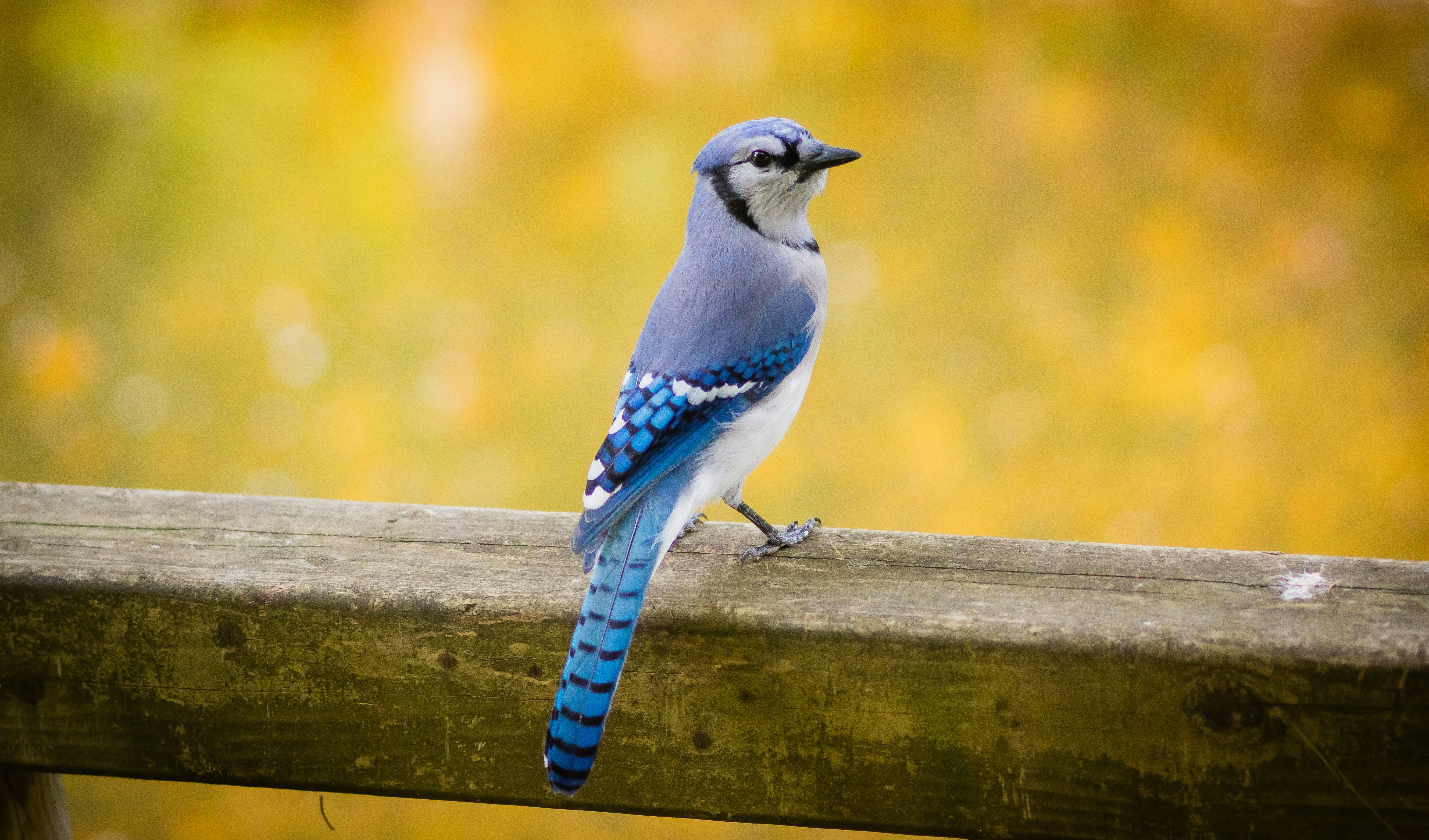
After a province-wide vote, Prince Edward Island adopted the Blue Jay in 1977. It is bright blue above with a crest, a black necklace across the chest, and bold black-and-white markings on the wings and tail. Loud and clever, it is a known mimic that sometimes imitates the scream of a hawk. It lives in woodlands, farm edges, and backyards across the island and is a regular at feeders, so it is visible year-round and especially obvious in fall and winter.
Newfoundland and Labrador: Atlantic Puffin
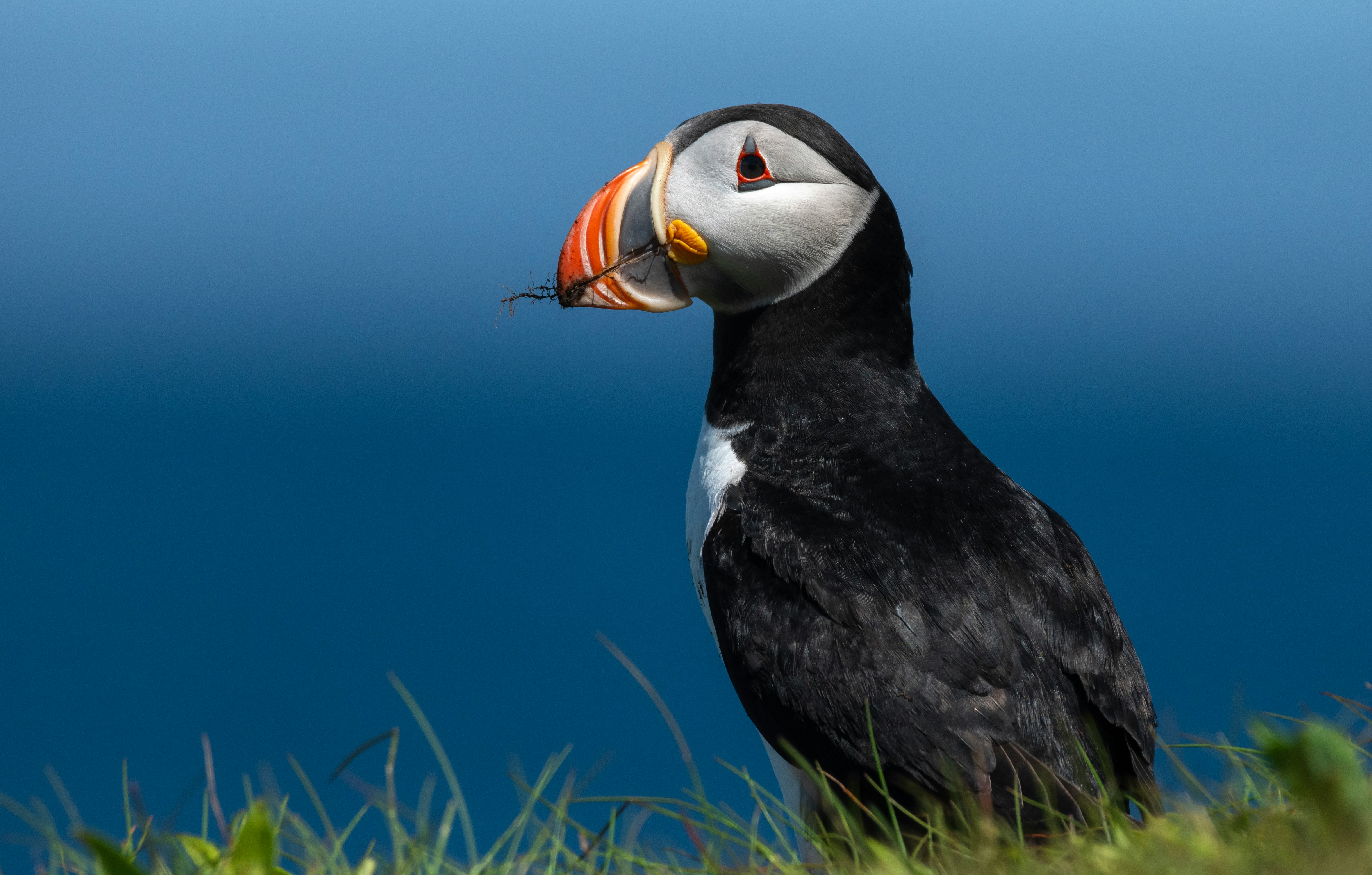
The Atlantic Puffin is a small, stocky seabird with black upperparts, white underparts, and a large triangular bill that turns brilliant orange, red, and yellow in the breeding season. It flies low and fast over the water on rapidly whirring wings. It breeds in huge colonies on coastal islands, and the Witless Bay Ecological Reserve just south of St. John's holds the largest colony in North America. The window to see them is late spring through summer, roughly May to August, since they spend the rest of the year far out at sea.
The Territories
Yukon: Common Raven
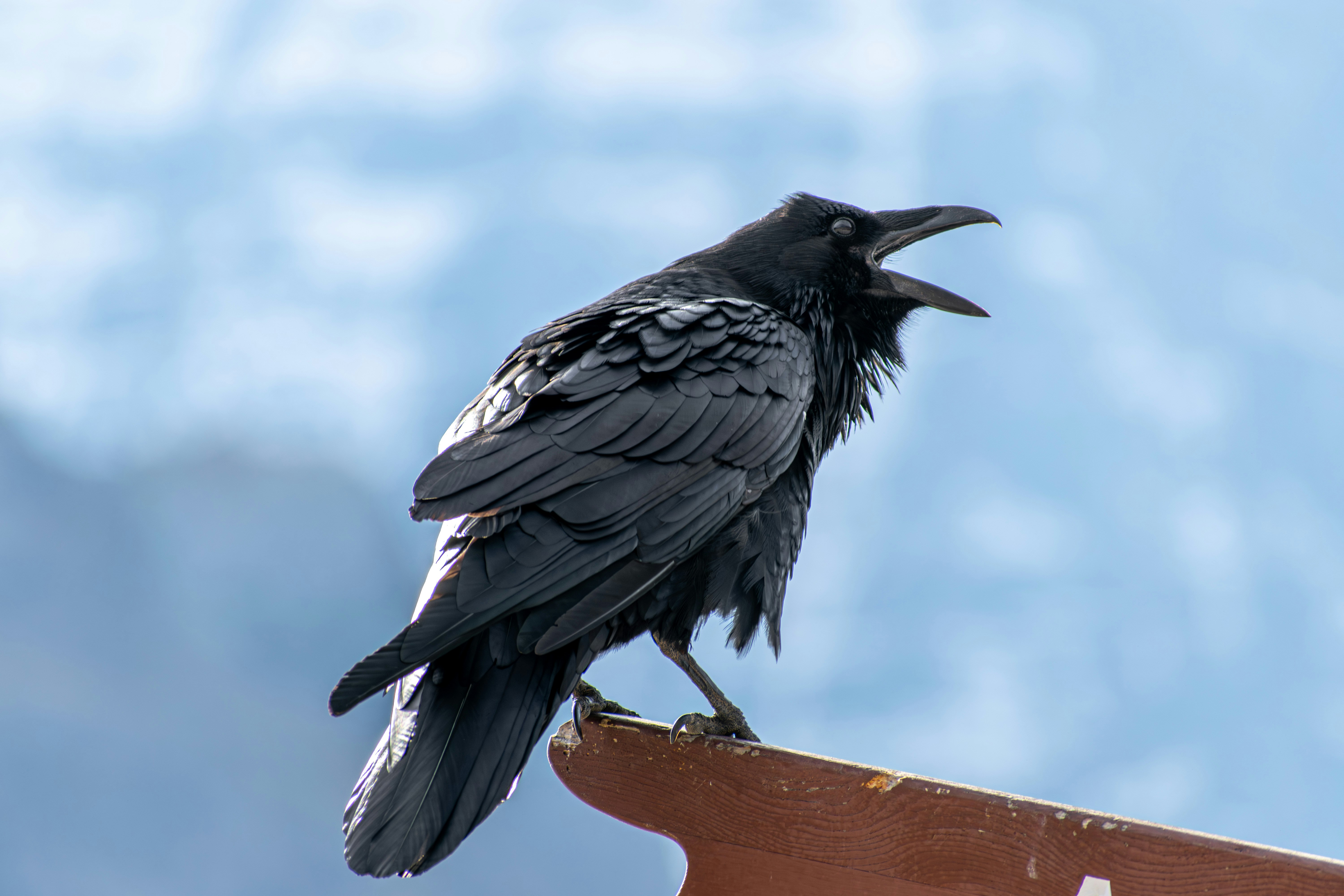
The Yukon chose the Common Raven in the mid-1980s, honouring its intelligence and its deep place in First Nations storytelling. It is a large, all-black bird, noticeably bigger than a crow, with a heavy bill, shaggy throat feathers, and a wedge-shaped tail in flight. It is at home everywhere from remote wilderness to the streets of Whitehorse, and it stays through the coldest months. You can find it year-round, making it one of the most reliable territorial birds on this list.
Northwest Territories: Gyrfalcon
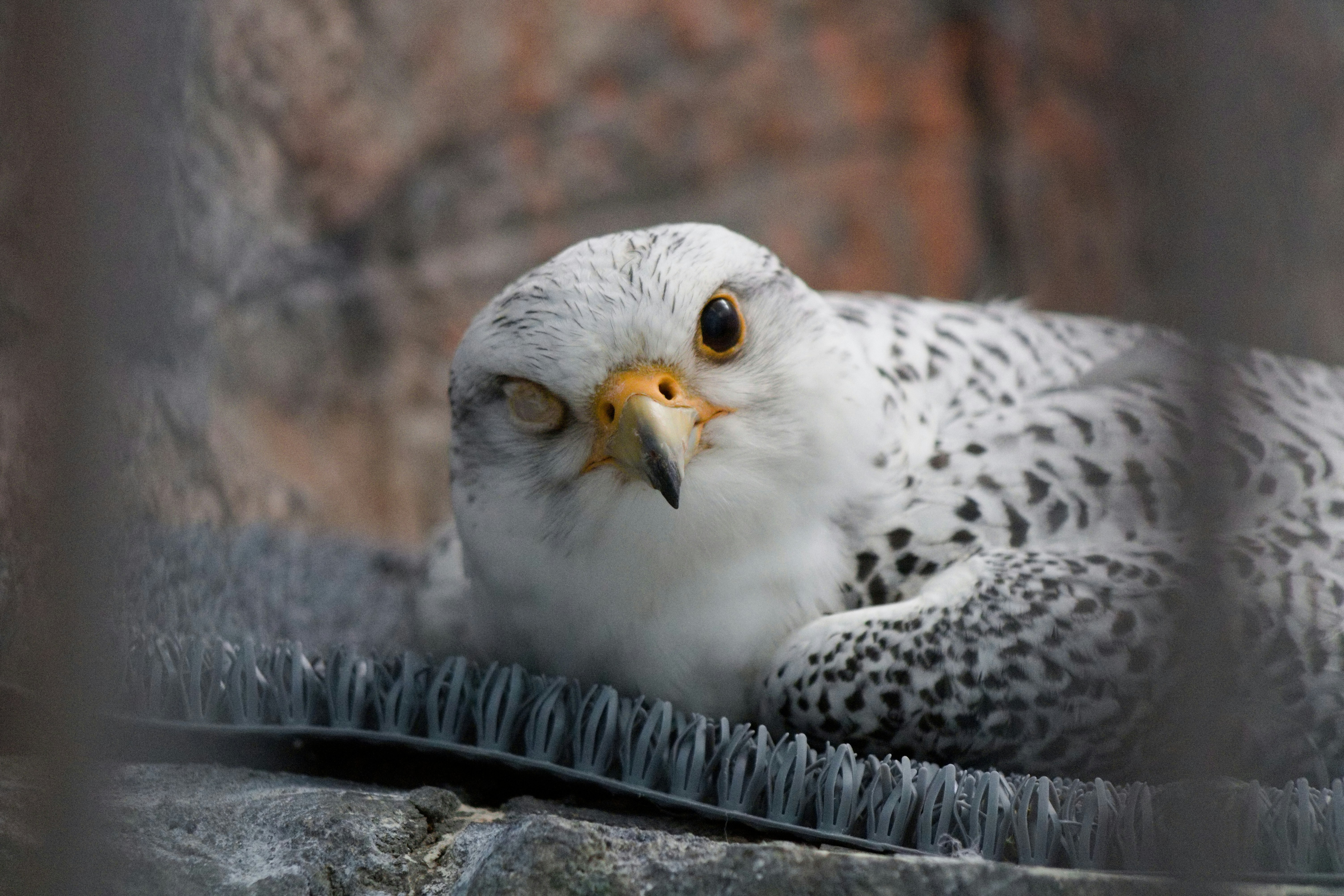
The Gyrfalcon is the largest falcon in the world, a broad-chested, powerful hunter that ranges in colour from dark slate grey to almost pure white. Its flight is fast and low, with a heavier, less sharply pointed look than smaller falcons. It lives on Arctic tundra, cliffs, and river valleys across the territory, and it takes real effort to find in such remote country. Some birds move to more open areas in winter, which can improve your odds, but it remains a prize sighting in any season.
Nunavut: Rock Ptarmigan
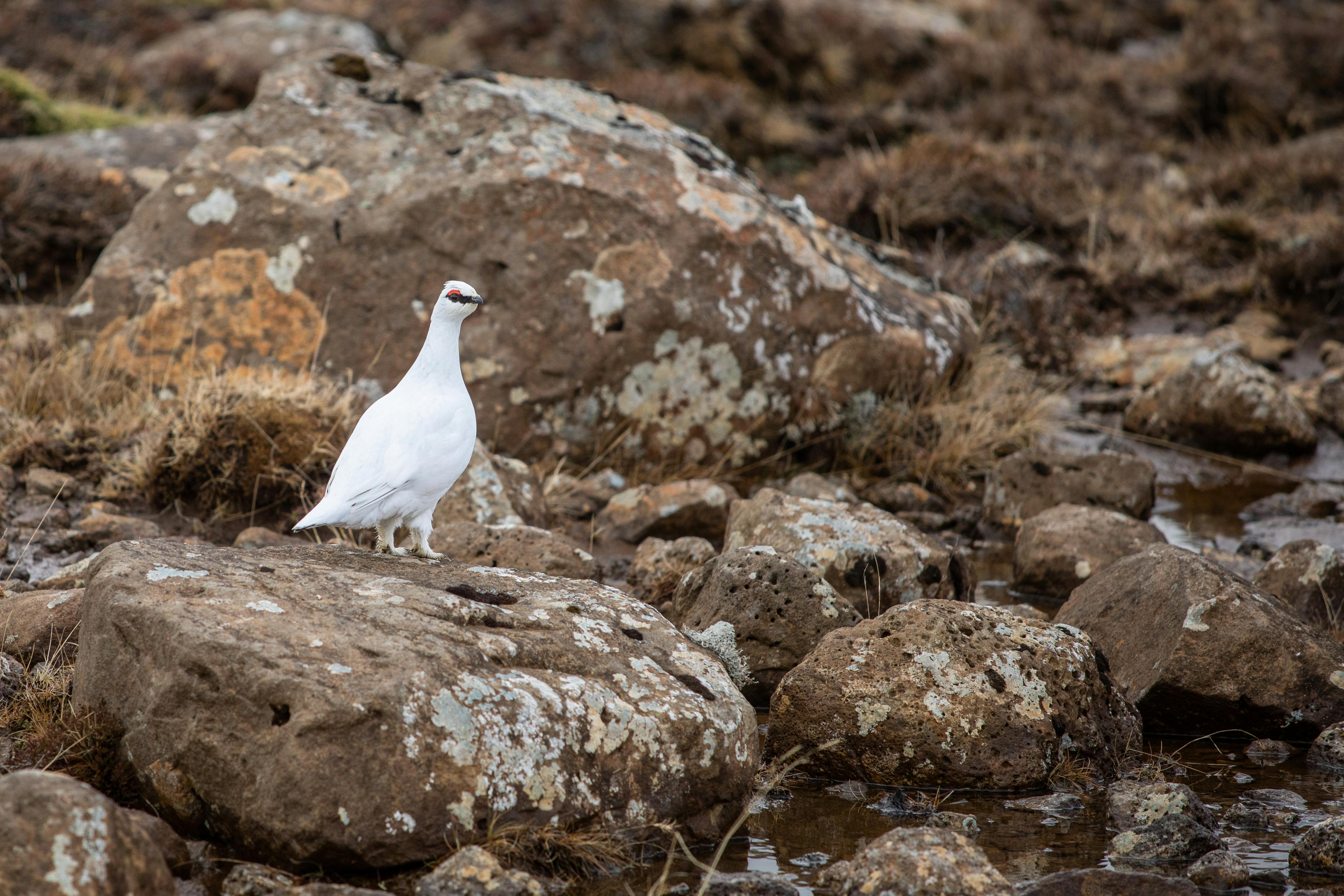
Nunavut's bird is a master of camouflage. The Rock Ptarmigan turns pure white in winter to blend with snow, then moults to a mottled brown and grey in summer to match the bare tundra. Males show a small red comb above the eye in the breeding season. It lives on Arctic tundra and rocky slopes across the territory and does not migrate, so it is a year-round resident. In a sense, the bird's plumage tells you the season as clearly as a calendar.
What About Canada's National Bird?
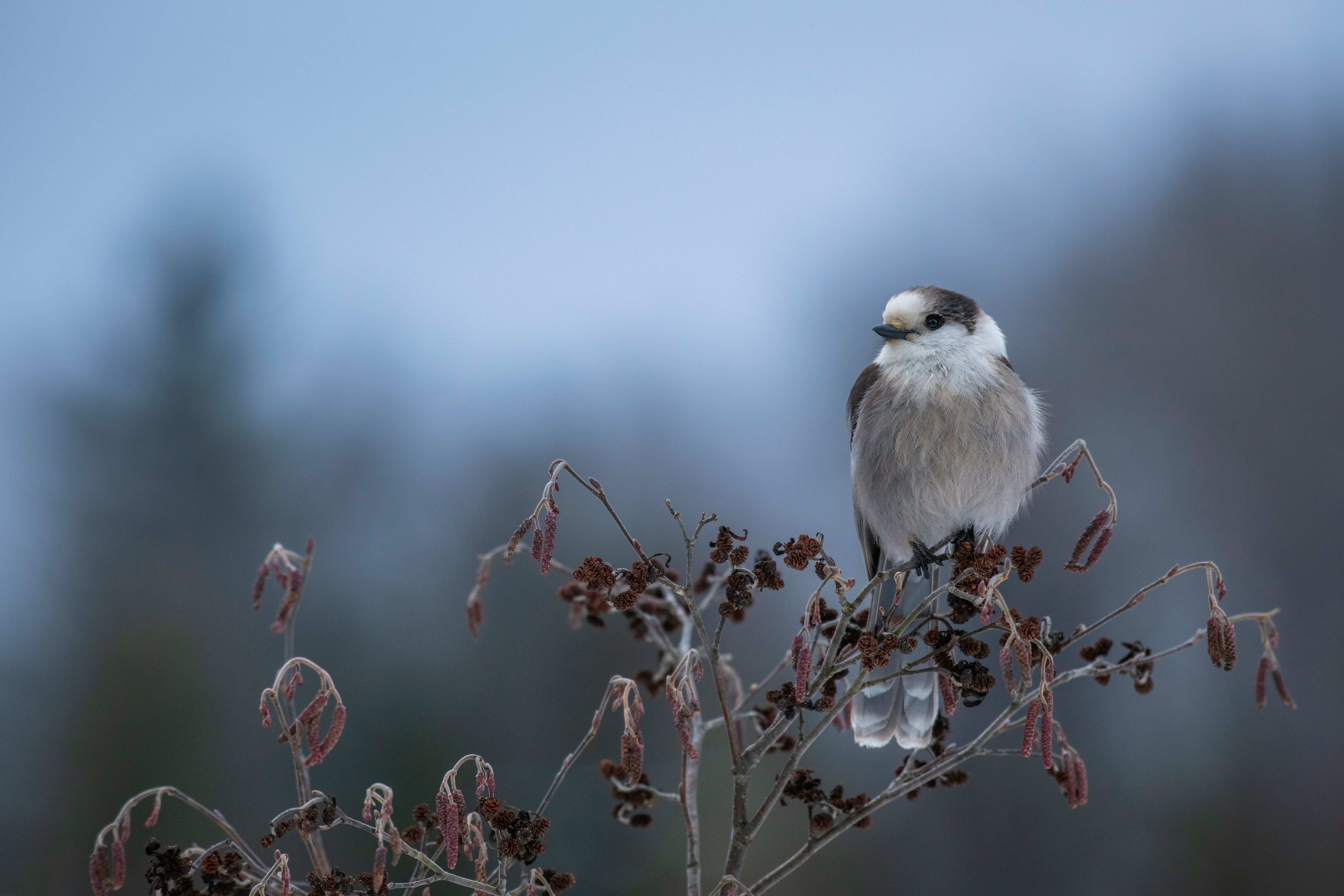
If you are wondering where the national bird fits in, the Canada Jay, also widely known as the Gray Jay, was named Canada's national bird in 2016. It is a soft grey, fluffy-looking bird of the boreal forest, famous for its fearless habit of landing on outstretched hands. It is not a provincial or territorial symbol, which left it free to represent the whole country.
Gear That Helps You Spot Them
You can enjoy any of these birds with your bare eyes, but a field guide and a basic pair of binoculars turn a quick glimpse into a confident identification. For a Canada-specific reference, the Birds of Canada (DK)photographic guide profiles hundreds of species with range maps and clear photos, which makes it easy to confirm what you saw without wading through birds that never appear here. If you are buying your first optics, an entry-level all-rounder like the Celestron Nature DX 8x42 binoculars gives you a bright, steady 8x view that suits everything from backyard chickadees to a loon across a lake. For a fuller breakdown of options at different budgets, see our guide to the best binoculars for beginner birders in Canada.
Frequently Asked Questions
What is Canada's national bird?
Canada's national bird is the Canada Jay, also called the Gray Jay, which was named to the role in 2016. It is a grey boreal forest bird known for being unusually tame around people.
Does every Canadian province have an official bird?
Yes. All ten provinces and all three territories have an official bird, giving Canada thirteen in total. Saskatchewan was the first to choose one, naming the Sharp-tailed Grouse in 1945.
How many provincial birds are owls?
Three. Alberta chose the Great Horned Owl, Manitoba the Great Grey Owl, and Quebec the Snowy Owl, which makes owls the most common type of official bird in Canada.
Which official bird is the easiest to see?
For most people it is the Black-capped Chickadee or the Blue Jay, since both visit backyard feeders year-round in eastern Canada. In the north, the Common Raven is just as reliable and present in every season.
When is the best time to see an Atlantic Puffin in Newfoundland?
Late spring through summer, roughly May to August, when puffins gather at coastal breeding colonies such as the Witless Bay Ecological Reserve. They spend the rest of the year out at sea and are not visible from shore.
Final Thoughts
From the loon's call on an Ontario lake to a ptarmigan vanishing into Arctic snow, Canada's official birds are a ready-made checklist for exploring the country one province at a time. Pick the ones near you, learn their calls and seasons, and the rest will follow naturally. For an easy place to start in your own yard, see our guide on how to attract more birds to your backyard.