Fall Bird Migration in Canada: A Season-by-Season Guide
By late August, something changes in the sky above your backyard. Hushed flocks move south before dawn, restless chip notes drift down from birds passing overnight, and a hawk rides a thermal you would have missed a month earlier. Fall bird migration in Canada runs from roughly mid-July, when the earliest shorebirds start showing up, through late November, when the last northern-breeding waterfowl push south ahead of freeze-up. It is longer, quieter, and trickier to read than spring migration, but it is also the best stretch of the year to see the widest range of species pass through the country.
This guide breaks fall migration down by month, tells you what to watch for and where, and covers what you can do at home to make your yard a useful stop for migrants passing through.
Why fall migration looks and feels different from spring
Spring migration is loud and concentrated. Birds arrive in breeding colours, singing to claim territory, and the whole push through southern Canada is more or less finished by early June. Fall is the opposite in almost every way.
Adult birds moult into duller, non-breeding plumage after the breeding season, and this year's young travel south in their first-ever set of feathers, often looking nothing like the field guide picture of an adult. Songbirds mostly stop singing once breeding ends, so you are identifying by call notes, shape, and behaviour rather than song. The whole process is also spread out over four or five months instead of six or seven concentrated weeks, since different species groups move on their own schedules: shorebirds first, then songbirds and raptors, then waterfowl and winter finches last.
None of this makes fall migration worse for birding. It makes it a longer season, and a better test of your identification skills.
What moves when: a month-by-month timeline
| Period | What to watch for |
|---|---|
| Mid-July to August | Shorebirds (sandpipers, plovers) on mudflats and shorelines, early warbler movement beginning |
| September | Peak warbler and songbird migration, hawk and raptor migration builds toward its peak |
| Early to mid-October | Sparrows, late warblers, peak raptor migration in most of the country |
| Late October to November | Waterfowl (ducks, geese, loons) move through in large numbers, winter finches begin arriving in irruption years |
Shorebirds: the quiet opening act
Fall migration technically starts earlier than most people realise. Failed or non-breeding adult shorebirds begin moving south as early as late June, with the main push running through July and August. Look for them on exposed mudflats, sod farms, sewage lagoons, and lakeshores, all unglamorous habitats that happen to be exactly what a hungry sandpiper wants. Least sandpipers, semipalmated sandpipers, semipalmated plovers, and greater and lesser yellowlegs are reliable across most of the country during this window.
Warblers and songbirds: the identification challenge
September is peak season for warblers, vireos, flycatchers, and thrushes moving south through Canada, and it is also the trickiest stretch of the year for identification. Fall warblers lose their crisp spring colours and often look like faded, streaky versions of themselves, which is exactly why birders call this period "confusing fall warblers." Focus on shape, wing bars, undertail pattern, and behaviour rather than colour alone. For a full breakdown of how to sort out fall warbler plumage, see our guide on how to identify fall warblers in Canada.
Raptors: hawk watching season
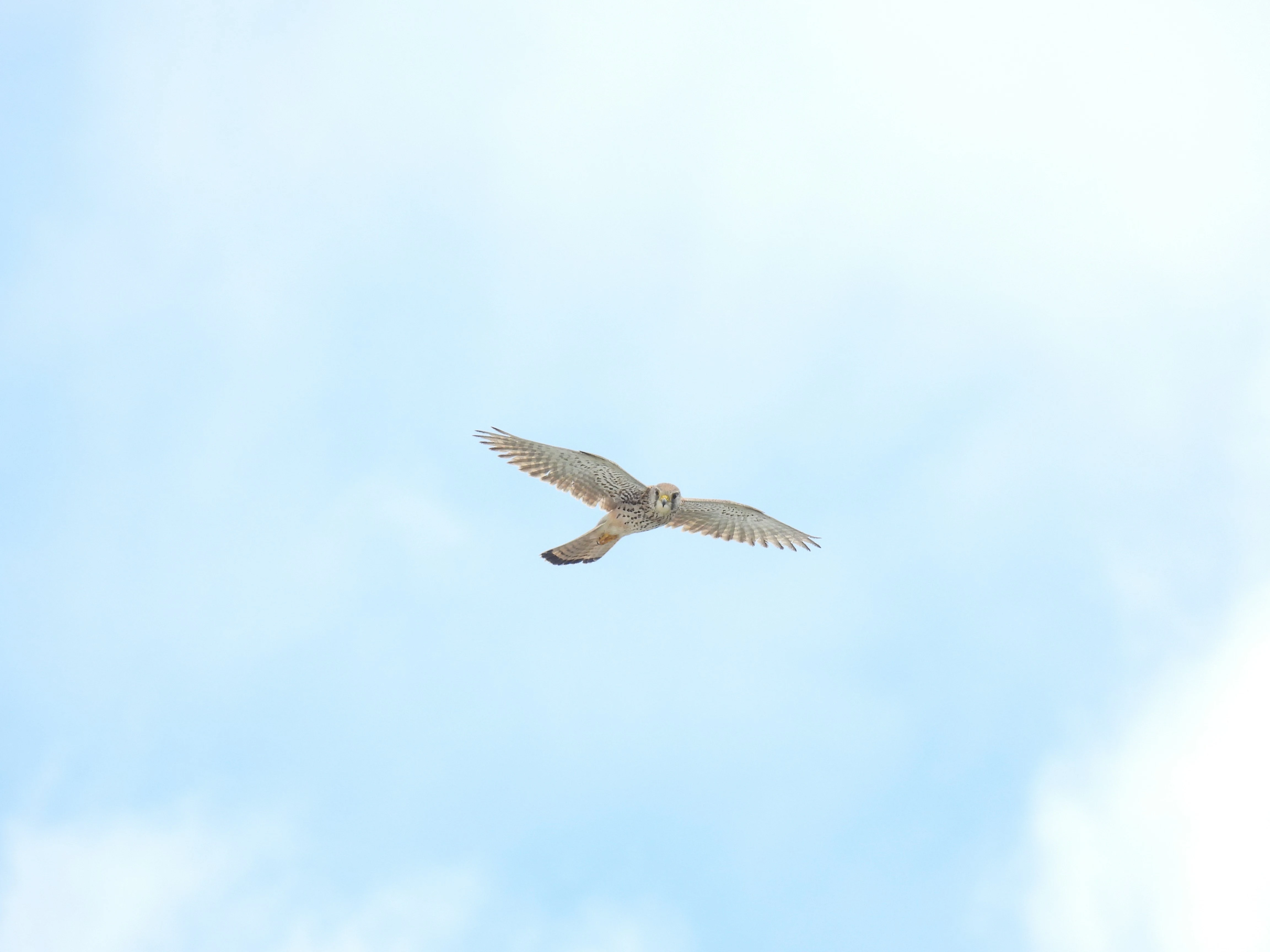
Migrating hawks, eagles, and vultures take advantage of rising warm air columns called thermals, which means the best hawk watching happens on clear, breezy days along shorelines and ridgelines that concentrate the birds. Broad-winged hawks are the headline act in mid-September, sometimes passing in "kettles" of hundreds or even thousands of birds riding the same thermal. Sharp-shinned hawks, red-tailed hawks, and turkey vultures move over a longer window into October. Dedicated hawk watch sites across Ontario and elsewhere in Canada count and report these movements daily during peak season. We cover specific hawk watching locations and timing in our guide to hawk migration watching in Ontario.
Waterfowl: the fall finale
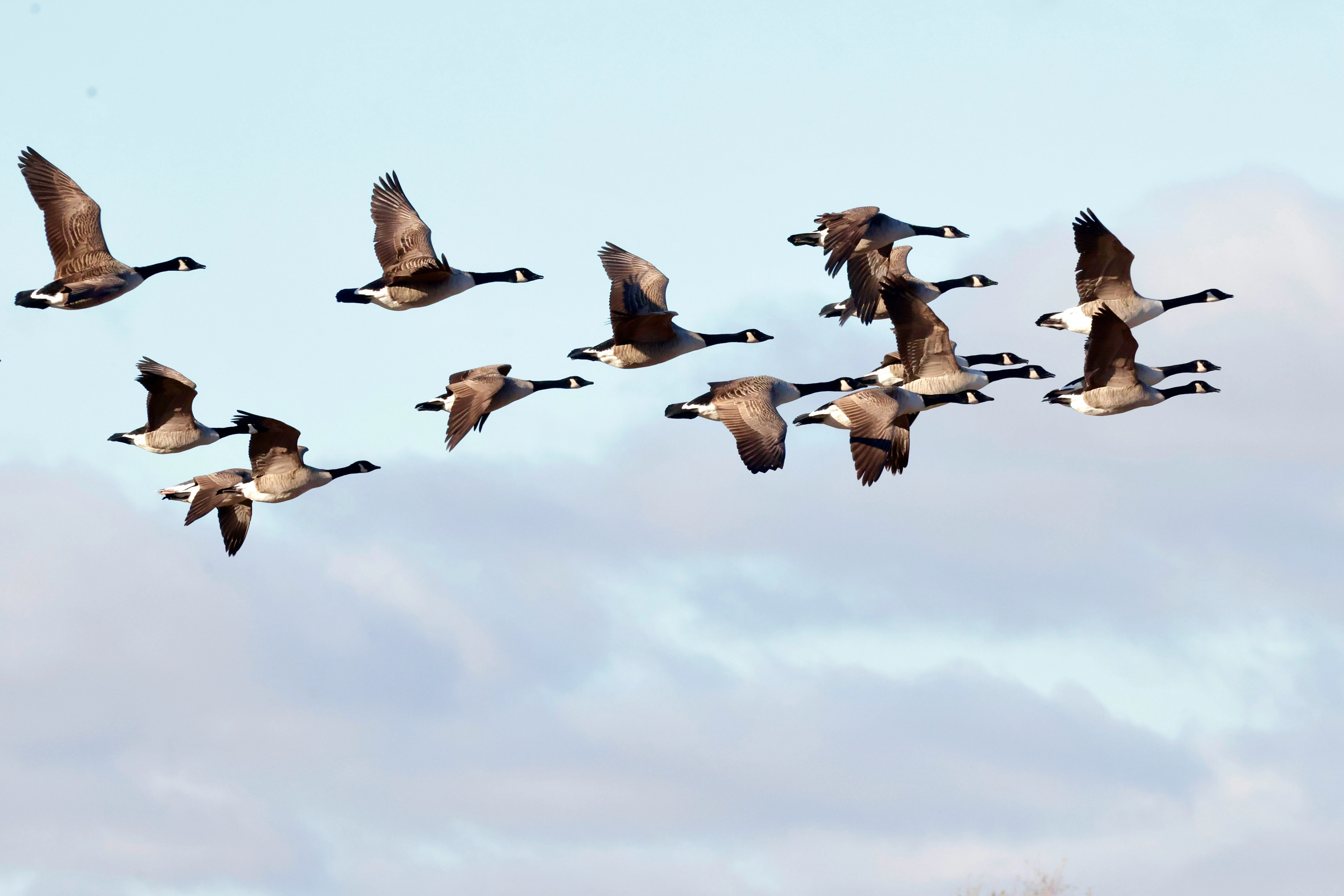
Ducks, geese, and loons are among the last groups to move, with numbers building through October and peaking in November as northern lakes and wetlands begin to freeze over. This is when you will see the classic V-formations of Canada geese overhead, along with large rafts of scaup, scoters, and mergansers gathering on open water. Great Lakes shorelines, major rivers, and coastal areas all become waterfowl magnets in late fall. Our guide to the best places to see ducks and geese during fall waterfowl migration covers where this show is most reliable.
Winter finches: the wildcard
Some years, fall migration has a bonus act. When seed crops fail in the boreal forest, winter finches such as pine siskins, redpolls, purple finches, and evening grosbeaks push farther south than usual in search of food, an event birders call an irruption. These movements are irregular and vary by year, but when they happen, they can bring northern species to backyard feeders across southern Canada that would not normally show up at all. Check our annual winter finch forecast to see what is expected this year.
Where to watch fall migration in Canada
Geography does a lot of the work for you. Peninsulas, points of land, and shorelines concentrate migrating birds because they are reluctant to cross large stretches of open water, which makes these spots produce far more birds than the surrounding landscape.
In southwestern Ontario, Point Pelee National Park is Canada's best-known migration hotspot, and while it is most famous for spring, its fall songbird and hawk movement is excellent and far less crowded. Closer to Toronto, Colonel Samuel Smith Park is a reliable city option for fall warblers, raptors, and the first arriving waterfowl, all from a paved, accessible trail.
Outside Ontario, every province has its own version of a migration trap: a headland, a river delta, or a chain of wetlands that concentrates birds during the fall push. We are building out province-by-province coverage of these spots, starting with our guide to the common backyard birds of Alberta.
Get your backyard ready for fall migrants
You do not need to travel to benefit from fall migration. A well-set-up backyard becomes a rest stop for tired, hungry birds passing through, even if they only stay for an hour.
Water is the single best draw during migration. A birdbath, especially one with moving water from a dripper or mister, will pull in warblers, vireos, and thrushes that ignore feeders entirely. Native plants that hold berries into fall, such as serviceberry, dogwood, and wild grape, feed fruit-eating migrants like catbirds, robins, and cedar waxwings on their way south. Keep feeders stocked too, since arriving winter residents and early winter finches will start relying on them as the weeks get colder.
For a full rundown of feeder placement, plantings, and seasonal expectations, see our guide on how to attract more birds to your backyard. We also have a guide specifically on how to prepare your backyard for fall migration with more seasonal detail. A comfortable pair of binoculars also makes a real difference for following fast-moving flocks and distant raptor kettles. If you are still shopping for your first pair, our guide to the best binoculars for beginner birders in Canada covers solid options at every budget.
Frequently asked questions
When does fall bird migration start in Canada? Fall migration effectively begins in late June and July with early shorebird movement, though most birders think of September as peak season, when warblers, songbirds, and hawks are all moving at once. The full season stretches into late November with waterfowl.
What birds migrate through Canada in the fall? Nearly every group moves at some point: shorebirds in July and August, warblers, vireos, and flycatchers through September, hawks and raptors peaking in mid-September, sparrows into October, and waterfowl through October and November. In some years, winter finches add a final, unpredictable wave.
Is fall or spring migration better for birdwatching in Canada? Both have advantages. Spring is more concentrated, with birds in bright breeding plumage and singing, which makes identification easier. Fall is longer and quieter, with trickier identification, but it moves more individual birds overall and includes groups, like raptors and winter finches, that are far less visible in spring.
Where is the best place to watch fall migration in Canada? Anywhere that concentrates birds along a shoreline or point of land tends to be excellent, with Point Pelee National Park and Colonel Samuel Smith Park both reliable options in southern Ontario. Every province has similar geography-driven hotspots worth seeking out locally.
Do all birds migrate at night? Most songbirds migrate at night and land at dawn to feed and rest, which is why a good stretch of habitat can seem to fill with new birds overnight. Hawks, waterfowl, and some other groups migrate during the day instead, often using rising warm air or open water to help them along.
Final thoughts
Fall migration rewards patience more than any other birding season, since the action is spread across five months instead of five weeks. Learn the rough monthly schedule, put in some time at a nearby shoreline or point of land, and keep your backyard stocked with water and food, and you will see far more of it than you expect. If you want to start close to home, our guide on how to attract more birds to your backyard is a good place to begin.