As an Amazon Associate, NorthernPerch.ca earns from qualifying purchases.
If chickadees and nuthatches disappear from your feeders the moment the weather turns cold, the problem usually isn't your seed, it's that you don't have suet up yet. Suet, rendered fat pressed into a cake, is one of the highest-energy foods you can offer, and it pulls in species that barely touch sunflower seed the rest of the year. This guide covers the best suet feeders available in Canada right now, from a basic wire cage you can pick up for well under $20 to a squirrel-proof option built to survive a real Canadian winter.
If you're just getting started with backyard birding generally, our broader guide on how to attract more birds to your backyard in Ontario is a good place to begin.
What to Look For in a Suet Feeder
Before getting into specific products, it helps to know what actually matters.
Cage material and mesh size. Most suet feeders are a metal wire cage holding a standard suet cake. Smaller mesh openings work better for smaller birds like chickadees and nuthatches, since it forces them to peck rather than rip off large chunks, while still letting bigger woodpeckers get a solid grip.
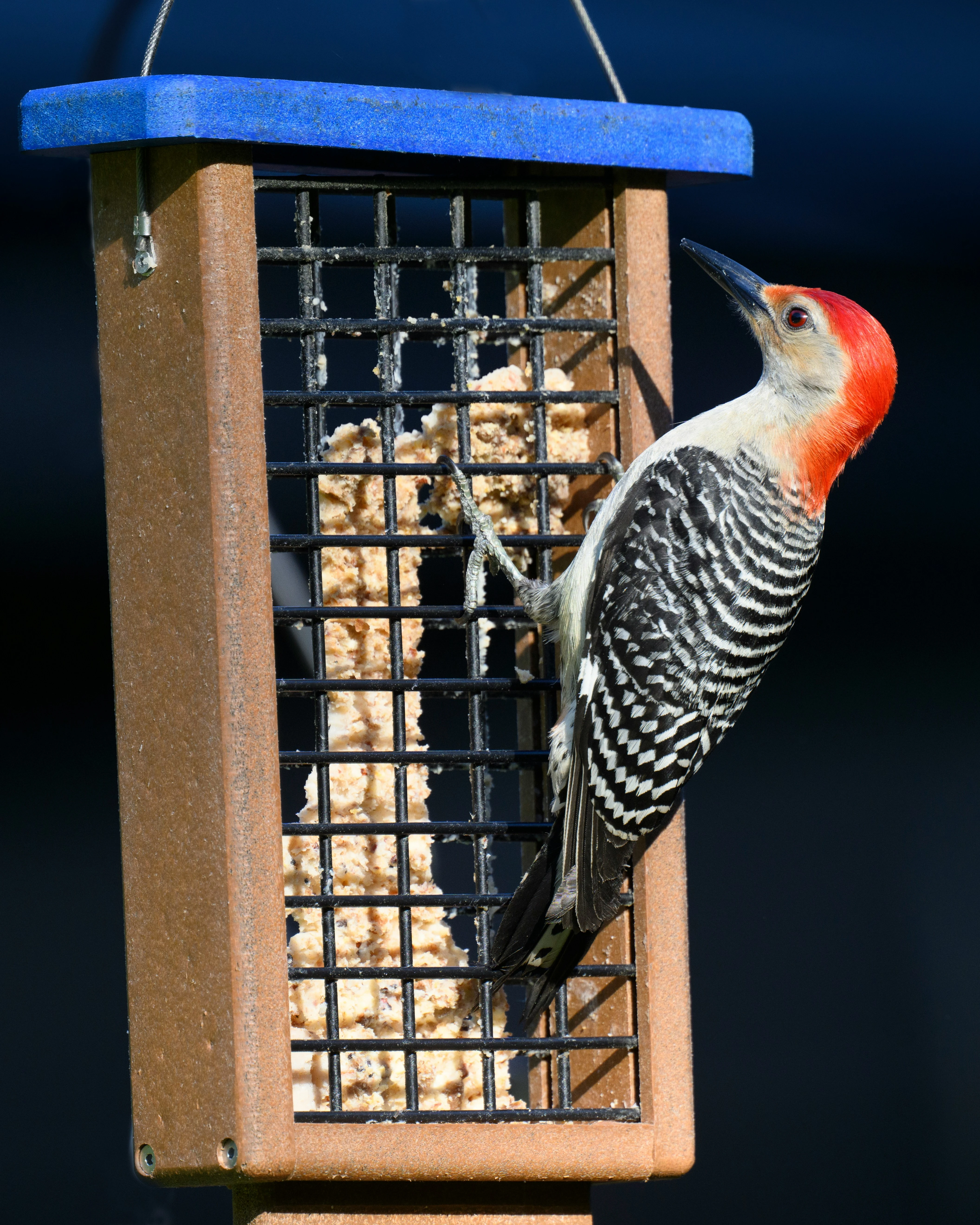
Tail support. Woodpeckers brace their stiff tail feathers against something while feeding, the same way they do on a tree trunk. A feeder with a tail-prop board underneath the cage is a meaningfully better design for woodpeckers specifically, and it's the detail that separates a basic cage from a feeder built with woodpeckers in mind.
Squirrel and starling pressure. Suet is popular with more than just the birds you want. Squirrels will chew through a basic cage eventually, and starlings can strip a feeder fast when they arrive in a flock. If either is a problem in your yard, a caged or weight-activated design is worth the extra cost.
Weather protection. A small roof over the suet cake keeps rain and snow off, which matters more than it sounds like in a Canadian winter, since a soaked suet cake degrades faster and can freeze into an unusable block.
Capacity. Single-cake feeders are the standard, but a double-cake feeder cuts down on refill trips if you have heavy traffic or are away from home for stretches at a time.
The Best Suet Feeders in Canada
Basic Wire Cage Suet Feeder
The Stokes Select Suet Bird Feeder is the cheapest way to find out whether suet gets used in your yard at all before spending more. It holds one standard suet cake, has no moving parts to break, and is easy to hang from almost any bracket or branch. The trade-off is that it offers no protection from squirrels or starlings, so if either is common where you live, expect some competition for the suet.
Price: around $6 CAD, consistently one of the cheapest dedicated suet feeders on Amazon.ca.
Best for: First-time suet feeders, anyone who wants a cheap way to test demand before upgrading.
Tail-Prop Suet Feeder
The Kingsyard Tail-Prop Suet Feeder adds a tail-prop board below the wire cage, giving woodpeckers a natural brace for their tail feathers the same way they'd use bark on a tree. It's a small design difference that makes a real one, since woodpeckers feed more comfortably and stay longer on a feeder built this way compared to a plain cage. Chickadees and nuthatches use it just as readily as any other suet feeder.
Price: around $48 CAD.
Best for: Yards that already get regular woodpecker visits, anyone wanting the most natural feeding position for larger birds.
Squirrel-Proof Caged Suet Feeder
If squirrels are chewing through your suet cages faster than the birds can eat, the Brome Squirrel Buster Suet Feeder is the fix. It uses the same weight-activated shroud as the Squirrel Buster Standard already covered in our finch feeder guide, just built for two suet cakes instead of seed: a squirrel's weight forces the shroud down and closes off the feeding ports, while chickadees, nuthatches, and woodpeckers keep feeding normally.
Price: around $120 CAD, the most expensive option here, but it is genuinely effective against determined squirrels.
Best for: Yards with heavy squirrel pressure, anyone who has already lost a cheaper suet feeder to chewing damage.
Double-Cake Suet Feeder
The Kingsyard Squirrel-Proof Suet Feeder holds two suet cakes side by side, which roughly doubles the time between refills. It takes a simpler approach to squirrel resistance than the Brome feeder above, the all-metal cage just keeps the suet a bit out of reach by geometry rather than an active mechanism, which is not as bulletproof but works well against casual squirrel pressure at under a third of the price.
Price: around $37 CAD.
Best for: Established yards with high suet traffic, anyone who doesn't want to refill constantly through peak winter, and a lighter-duty squirrel deterrent than the Brome feeder without the higher price.
Which Suet Feeder Should You Buy?
If you've never put out suet before and just want to see whether it gets used, start with the basic wire cage. It's the cheapest way to get an answer.
If you're already seeing woodpeckers at your feeders, the tail-prop style is worth the small upgrade, it's simply a more comfortable design for the birds most likely to become your regulars.
If squirrels are the problem, you actually have two options here at very different price points. The Brome Squirrel Buster is the more determined solution, its weight-activated mechanism handles persistent squirrels that a passive cage design eventually gives up against. The Kingsyard double-cake feeder is the budget-friendly middle ground, its all-metal cage keeps suet out of easy reach without an active mechanism, which is plenty for casual squirrel visits and also happens to be the higher-capacity option of the two.
If you're feeding a lot of birds and don't want to refill every few days in January, either of the double-capacity style feeders covered above will cut down on refill trips.
A Few Tips Before You Set Up
Placement matters. Hang suet feeders near cover, a tree or shrub within a few metres gives woodpeckers and nuthatches a place to retreat to, and keeps them feeling safe enough to stay and feed properly.
Watch for rancid suet in warm weather. Suet can turn rancid and drip in hot conditions, so in Canada it's really a fall-through-spring food. Many birders pull suet feeders down for the hottest weeks of summer and put them back out once temperatures drop.
No-melt formulas exist for shoulder seasons. Some suet cakes are formulated to hold up better in warmer weather if you want to keep feeding through early fall or late spring without the mess.
Clean the cage occasionally. Old, greasy residue can go rancid even after the cake itself is gone. A quick scrub every so often keeps things from turning into a health risk for visiting birds.
Suet is one of the most reliable ways to bring woodpeckers, nuthatches, and chickadees in close for a good look, and once you're set up it's genuinely one of the lowest-maintenance feeder types out there. If you want to know exactly who's likely to show up, our Black-capped Chickadee species guide is a good place to start, and we're building out full identification guides for the White-breasted Nuthatch and Downy Woodpecker next, since both are among the most common suet visitors across Canada.