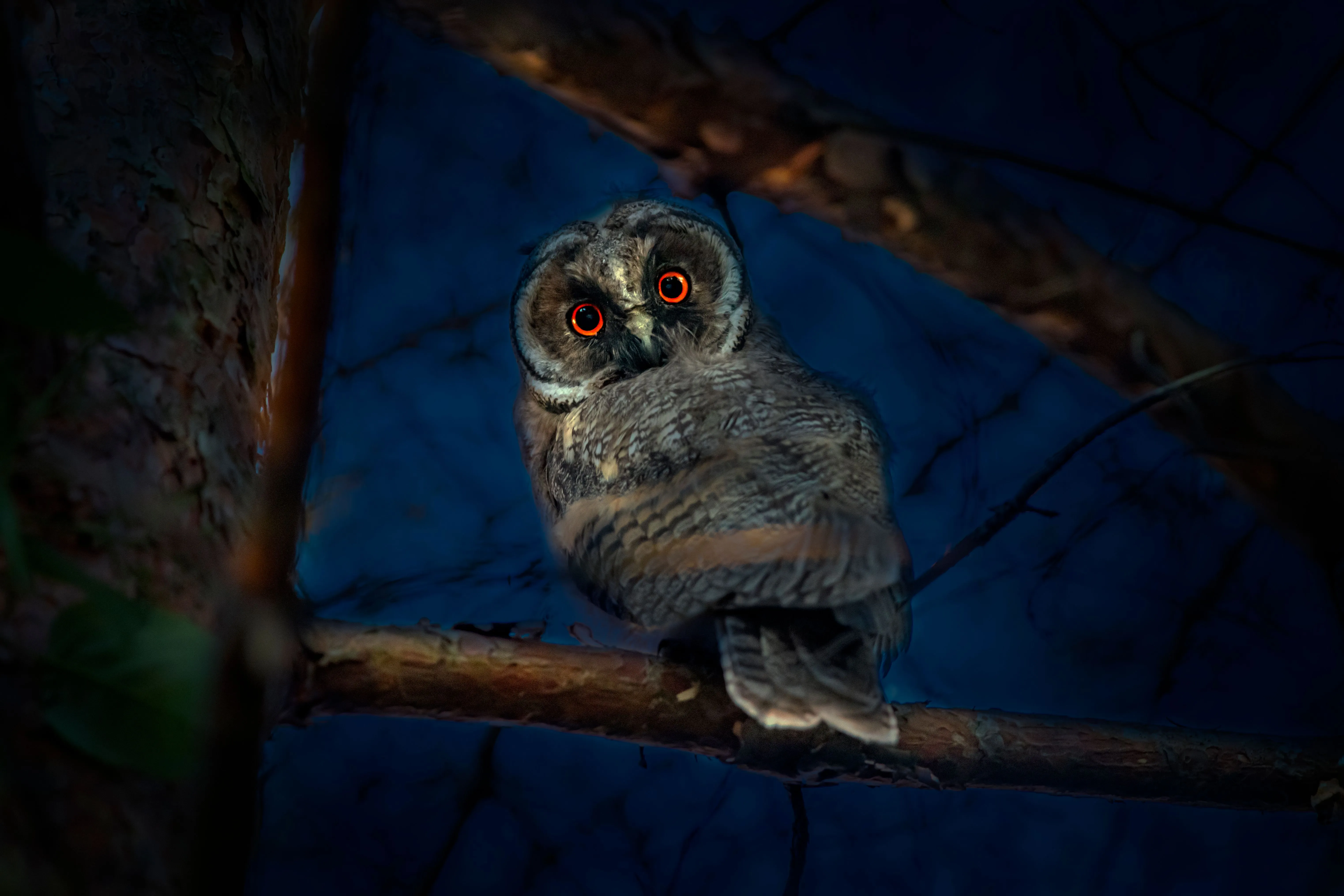
If you've ever tried to watch wildlife after sunset and come up empty-handed with your regular optics, you already know why infrared binoculars exist. The trouble is that searching for them in Canada means wading through a swamp of confusing terminology, overpromising specs, and products clearly written for US buyers.
As an Amazon Associate, NorthernPerch.ca earns from qualifying purchases. Links to products may be affiliate links, at no extra cost to you.
This guide cuts through that confusion. It explains what "infrared binoculars" actually means, how the technology differs from thermal imaging, and which products are worth your money if you're watching wildlife, hunting, camping, or birding at the edges of the day here in Canada.
Infrared, Thermal, and Night Vision: What's the Difference?
These three terms get used interchangeably online, and that's a problem because they describe very different technologies at very different price points.
Infrared (IR) illuminated night vision is the most common type sold under the "infrared binoculars" label. These devices use a built-in infrared LED illuminator, invisible to the naked eye, to light up a scene in the dark. A sensor picks up that reflected IR light and displays the image on a small screen inside the eyepiece, typically in green or black-and-white. They work well in low light and total darkness at short to medium range, usually up to 200 to 300 metres depending on the model.
Digital night vision is a variation on the same concept. Instead of traditional image intensifier tubes, these use a digital sensor and an onboard screen. Most affordable night vision binoculars sold today are digital rather than tube-based. The image quality is decent, and they often include features like video recording and photo capture.
Thermal imaging detects heat, not light. It requires no illuminator and works in complete darkness, fog, rain, and through light brush. Thermal devices show the temperature difference between objects, so a warm animal against a cool background stands out clearly. The trade-off is cost: thermal monoculars start well above $500 CAD for a reliable unit, and climb steeply from there.
If you want a practical primer on standard low-light optics for birding, see our guide to best night sight binoculars for a comparison of conventional and enhanced low-light approaches.
Who Actually Uses Infrared Binoculars in Canada?
The Canadian outdoors creates specific use cases that don't always match what you read on American gear sites.
Wildlife watchers and naturalists make up a large part of this market. Moose, black bear, deer, beaver, and countless other species are most active at dawn, dusk, and overnight. IR binoculars let you observe natural behaviour without disturbing animals with a visible light source.
Hunters are probably the biggest commercial buyers. Infrared and thermal devices are legal for scouting in most Canadian provinces, though restrictions on their use during the actual hunt vary by province and species. Always check your provincial regulations before using these devices in the field.
Campers and overlanders use them for general nighttime situational awareness, from checking a tree line for bears to watching what's moving around the campsite after dark.
Birders at dawn and dusk are a quieter but growing part of this audience. Early morning songbird surveys, owl prowls, and shorebird watches all happen in low-light conditions where even a basic IR device can make a real difference. If you're new to birding and primarily watching in daylight, our best binoculars for beginner birders in Canada guide is a better starting point. If you're serious about twilight and nocturnal watching, read on.
What to Look for Before You Buy
Detection Range
Manufacturers list detection range generously. A "300 metre range" often means "barely visible at 300 metres in perfect conditions." For practical wildlife use in Canadian terrain, trees and brush cut that number significantly. Look for units with at least 150 metres of usable range, and read user reviews that describe real-world performance rather than spec-sheet claims.
IR Illuminator Strength
A stronger illuminator means better performance in total darkness, but also more battery drain. Some higher-end units include adjustable illuminator intensity, which is useful for varying conditions. If you're watching wildlife at close range, a powerful illuminator at full strength can cause overexposure.
Display Quality and Refresh Rate
Budget units often have laggy, pixelated displays that make tracking moving animals difficult. Look for a refresh rate of at least 25 fps if you plan to watch moving subjects. Resolution matters too, though 640x480 is sufficient for most wildlife watching at typical distances.
Battery Life in the Cold
Cold Canadian nights drain batteries faster than specs suggest. Most manufacturers rate battery life at room temperature. In sub-zero conditions, expect 20 to 40 percent shorter run time. Devices that use standard AA or AAA batteries are more practical than proprietary packs in remote locations, since you can carry spares without worrying about charging access.
Built-in Recording
Many digital night vision binoculars include onboard video and photo recording. This is genuinely useful for documenting wildlife, logging bird sightings, and reviewing footage later. Check whether the unit requires a separate memory card or has built-in storage, and what the maximum recording resolution is.
The Best Infrared Binoculars Available in Canada Right Now
These six options cover a range of use cases and price points, and all are currently available on Amazon.ca. Prices shift over time, so check Amazon.ca for the current figure before purchasing.
1. Nightfox Swift Night Vision Goggles
Around $180 CAD, the Nightfox Swift is the most accessible entry point in this lineup. It's a head-mounted, hands-free unit with a wide viewing angle, 1x magnification, and a USB-rechargeable battery. The close-quarters design makes it well suited to woodland walks, campsite use, and owling where you need your hands free. Not ideal for long-distance observation, but for getting started with night vision in Canada without a large outlay, it's a reasonable first pick.
Check current price on Amazon.ca
2. Nightfox Swift 2 Pro Night Vision Goggles
The Swift 2 Pro steps up meaningfully from the base Swift, coming in around $300 CAD. It records 1080p video with audio, which makes it genuinely useful for documenting nocturnal wildlife, and the USB-rechargeable battery and head-mount design carry over from the Swift. At this price point you're getting real capability without crossing into professional territory. A good choice for wildlife watchers and birders who want to record what they see.
Check current price on Amazon.ca
3. Bushnell Equinox Z2 4.5x40 Night Vision Binoculars
Bushnell is one of the more recognisable optics brands in Canada, and the Equinox Z2 is their core digital night vision binocular. The 4.5x40 model is the lighter, more compact of the two Equinox Z2 configurations, coming in around $470 CAD. It handles low-light conditions well, records to a micro-SD card, and can be used in daylight with the IR illuminator off. A solid all-season field binocular for campers, hunters, and wildlife observers who want a handheld rather than head-mounted form factor.
Check current price on Amazon.ca
4. Bushnell Equinox Z2 6x50 Night Vision Binoculars
The 6x50 configuration of the Equinox Z2 gives you more magnification and a larger objective lens, which translates to better low-light performance at longer distances. At around $525 CAD, if you're glassing open fields, forest edges, or wetlands at dusk, the extra reach is worth the modest premium over the 4.5x40. The same micro-SD recording and daytime usability carry over from the smaller model. Between the two Equinox Z2 options, this one earns its keep for anyone doing serious wildlife or hunting observation.
Check current price on Amazon.ca
5. ATN BinoX 4K Smart HD Day/Night Binoculars
The ATN BinoX 4K is a different category of device entirely. At around $1,650 CAD, it functions as a true day/night binocular with a 4K sensor, onboard ballistic calculator, GPS, Wi-Fi streaming, and the ability to photograph and record everything you see. It's overkill for casual wildlife watching, but for hunters and serious naturalists who want one pair of binoculars that handles all light conditions with professional-grade recording capability, it's a compelling choice. The day/night functionality means it genuinely replaces your standard binoculars rather than supplementing them.
Check current price on Amazon.ca
6. TOPDON TS004 Thermal Monocular
At around $660 CAD, the TOPDON TS004 is the standout thermal option currently available on Amazon.ca. It detects heat signatures rather than relying on reflected IR light, which means rain, fog, and brush don't degrade the image the way they do with standard night vision. The 320x240 thermal resolution and 13mm lens deliver a usable detection range well beyond what IR illuminators can achieve, and the 11-hour battery life is genuinely practical for extended outings. It's a monocular rather than a binocular, but its all-weather capability puts it in a different performance class from everything else on this list.
Check current price on Amazon.ca
Comparison Table
| Model | Type | Price Range (CAD) | Best For | Recording |
|---|---|---|---|---|
| Nightfox Swift | Digital IR, head-mount | Around $180 | First-time buyers, hands-free use | No |
| Nightfox Swift 2 Pro | Digital IR, head-mount | Around $300 | Wildlife walkers, birders who record | Yes, 1080p |
| Bushnell Equinox Z2 4.5x40 | Digital IR binocular | Around $470 | Handheld all-season field use | Yes, micro-SD |
| Bushnell Equinox Z2 6x50 | Digital IR binocular | Around $525 | Long-distance wildlife and hunting | Yes, micro-SD |
| ATN BinoX 4K | Digital day/night binocular | Around $1,650 | Hunters, serious naturalists | Yes, 4K |
| TOPDON TS004 | Thermal monocular | Around $660 | All-weather detection, heavy cover | Yes |
A Note on Canadian Regulations
Infrared and thermal devices occupy a legal grey area in some provinces when it comes to hunting. Most provinces permit their use for scouting but restrict or prohibit use during the act of hunting itself, particularly for big game. Alberta, Ontario, and British Columbia each have specific provisions. Check with your provincial wildlife authority before using these devices in a hunting context. For wildlife watching and birding, there are no restrictions.
Frequently Asked Questions
Are infrared binoculars legal in Canada? Yes, infrared binoculars are legal to own and use in Canada for wildlife watching, camping, and general outdoor use. Hunting regulations vary by province; some prohibit the use of night vision or thermal devices during the act of hunting certain species. Always consult your provincial hunting regulations before using these devices in a hunting context.
What is the difference between infrared and thermal binoculars? Infrared binoculars use an IR LED illuminator to light up a scene and a sensor to capture the reflected light, similar in concept to a camera with a night mode. Thermal devices detect heat rather than light, producing an image based on temperature differences between objects. Thermal devices work in complete darkness, fog, and rain, and typically cost significantly more than IR units.
Can I use night vision binoculars for birdwatching in Canada? Yes. They are particularly useful for early morning songbird surveys, owling, and any birding that happens at civil twilight. Standard optical binoculars still outperform night vision devices in good light, so most birders use both rather than replacing one with the other.
How do cold Canadian winters affect night vision binoculars? Cold temperatures reduce battery performance noticeably. Most manufacturers rate battery life at room temperature. In sub-zero conditions, expect 20 to 40 percent shorter run time. If you're using these devices in fall or winter, carry spare batteries and keep them warm in an inside pocket until needed.
What range can I realistically expect from infrared binoculars? Advertised ranges are typically best-case figures. In real-world Canadian conditions, with trees, brush, and varying terrain, a unit advertised at 300 metres will often deliver a usable image at 100 to 150 metres. Thermal devices generally achieve longer usable detection ranges than IR-illuminated units under the same conditions.
Final Thoughts
Infrared binoculars fill a real gap in the Canadian outdoor toolkit. Whether you're an early-morning birder trying to identify what's calling before first light, a hunter scouting a field edge at dusk, or a naturalist watching a beaver pond after dark, they open up parts of the day that standard optics simply can't reach.
The right choice depends on how you plan to use them. The Nightfox Swift and Swift 2 Pro are solid starting points if you want hands-free capability at an approachable price. Step up to the Bushnell Equinox Z2 if you want a traditional handheld binocular form factor with better range. The ATN BinoX 4K is the pick for anyone who wants professional-grade day/night capability in one device. And if all-weather thermal detection is the priority, the TOPDON TS004 delivers it at the most accessible thermal price point currently on Amazon.ca. For daytime wildlife watching and birding, a quality optical binocular like the Vortex Diamondback HD 8x42 remains the better tool in any reasonable light.