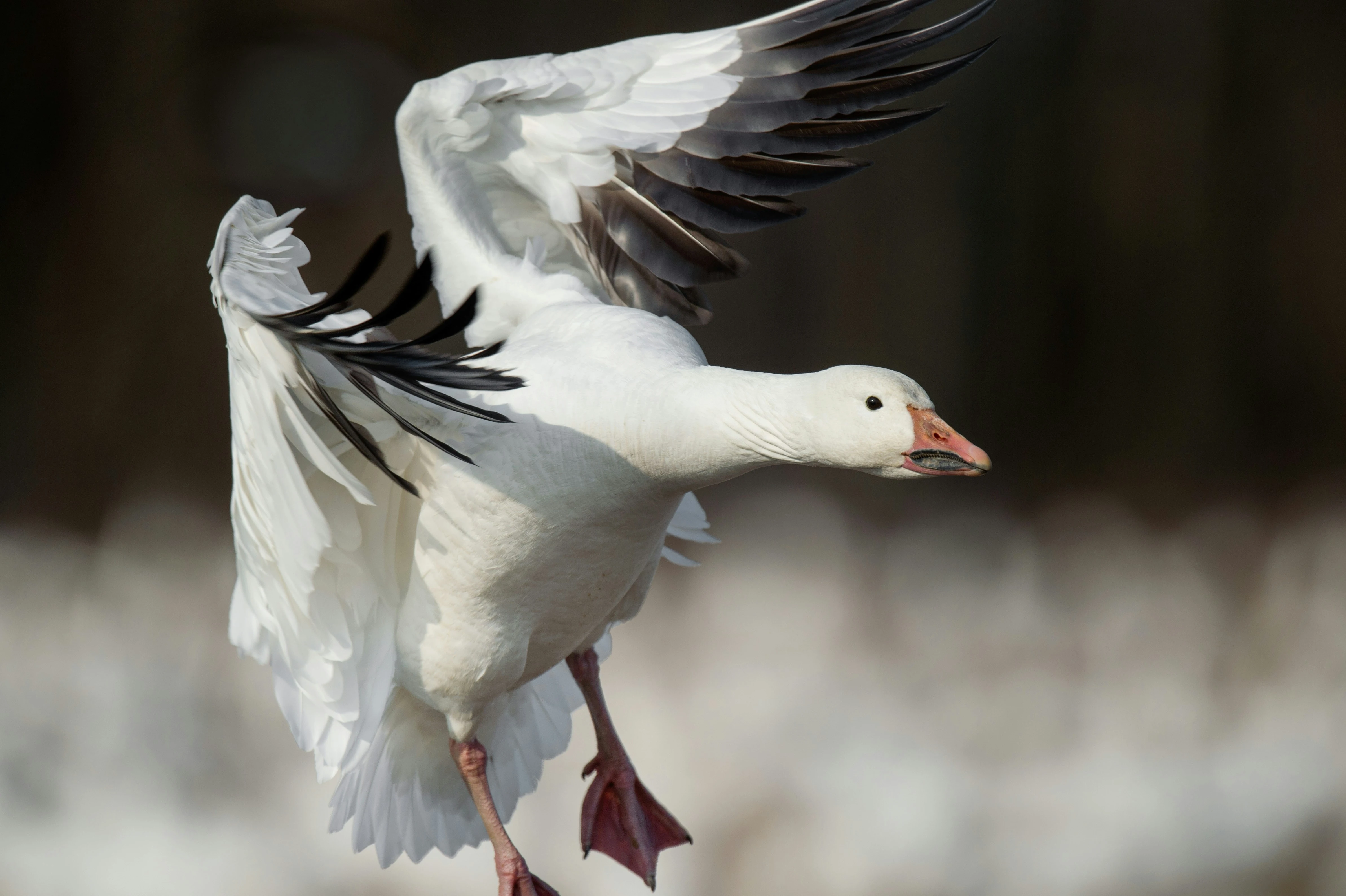
If your birding trips so far have mostly meant Ontario, Reifel Migratory Bird Sanctuary is worth the flight or the drive on its own. Tucked onto Westham Island in the Fraser River estuary south of Vancouver, this 300-hectare tidal marsh has been protected by the BC Waterfowl Society since 1963, and it delivers one of the best wildlife spectacles in the country: tens of thousands of snow geese lifting off a single field at once.
Why This Fraser Estuary Marsh Draws Birds
The sanctuary sits where the Fraser River meets the Salish Sea, a mix of freshwater ponds, tidal marsh, and channels that concentrates migrating and wintering birds the same way a good stopover always does. Nearly 300 species have been recorded here over the decades, and the site's location on the Pacific Flyway means the cast changes dramatically through the year. A network of dike trails, boardwalks, and a ten-metre observation tower gives you a genuine view over the marsh and out toward the water, without needing to leave the path.
Fall and Winter: The Snow Goose Spectacle
This is the reason most people make the trip. Lesser snow geese begin arriving from their Arctic breeding grounds in late September, and by October the sanctuary and the surrounding Fraser delta can hold up to 70,000 of them. Many stay through the winter, feeding on the surrounding farm fields and roosting on the marsh, so the flocks remain a reliable sight from October right through to April. Watching a field of geese lift off together, sometimes thousands at once, is the single biggest draw here, and it is worth building a winter trip around.
Sandhill Cranes and Trumpeter Swans
A resident pair of sandhill cranes calls the sanctuary home year-round, joined most winters by a small visiting group, usually fewer than ten additional birds, that arrives in late summer and sticks around into early winter. Trumpeter swans are another cold-weather highlight, often seen on the open water and surrounding fields alongside the geese. Bald eagles are common in the same season, drawn in by the sheer volume of waterfowl.
Owls of the Sanctuary
Winter is also owl season. Short-eared owls hunt low over the open marsh at dusk, and the sanctuary is one of the more reliable places in the Lower Mainland to see one. Northern saw-whet owls and great horned owls round out the winter lineup, typically found roosting in the denser stands of trees along the trails. As with any roosting owl, keep your distance and resist the urge to approach for a closer look.
Spring and Summer: Nesting Wood Ducks and Hand-Feeding Chickadees
Once the winter waterfowl move on, the sanctuary shifts into a quieter breeding season. Wood ducks nest in boxes scattered through the property, and May into June is the best window to see ducklings following their mothers across the ponds. This is also when the sanctuary's famously tame black-capped chickadees are at their most approachable, readily taking sunflower seed straight from a visitor's hand along the main trails, a reliable highlight for families and beginner birders alike. Feeding the resident ducks is a similarly popular activity in the warmer months.
Planning Your Visit
Reservations are required for every visit, and the system is free. Book online starting three days ahead, up until 8am on the day you plan to go, since spots do fill on weekends and holidays. The sanctuary is open 9am to 4pm daily except Mondays (holidays excepted), with last entry at 2:30pm for walk-ins and 3pm for reservation holders. Admission runs around $10 for adults, $8 for seniors, and $7 for children, with annual passes available if you plan to visit more than a couple of times a year.
The address is 5191 Robertson Road in Delta, reached by following Highway 10 west from Ladner to 47A Avenue, on to River Road, and across the bridge onto Westham Island. There is no public transit out to the sanctuary, so you will need a car. Dogs, bicycles, and drones are not permitted on the trails, and the on-site gift shop rents binoculars if you arrive without your own. If you already own a pair, our guide to the best binoculars for beginner birders in Canada is a useful refresher before the trip, and given how much of the marsh you will be viewing from a distance, we'll also have a full guide to the best spotting scopes for birding in Canada up soon for anyone looking to see the far side of the estuary in real detail.
Frequently Asked Questions
When is the best time to visit Reifel Bird Sanctuary? October through winter is the peak, when tens of thousands of snow geese, along with sandhill cranes and trumpeter swans, are present. Late spring is a strong second choice for nesting wood ducks and ducklings.
Do I need a reservation to visit? Yes. Reservations are required for all visitors and can be booked online for free, starting three days before your visit and up until 8am on the day.
Is Reifel Bird Sanctuary good for beginner birders? Very. The dike trails are flat and easy to walk, informational signage helps with identification, and hand-feeding the resident chickadees is an easy, memorable way to get comfortable being close to birds.
Are dogs allowed at the sanctuary? No. Dogs and other domestic animals are not permitted on the trails, in order to protect nesting and roosting birds.
How do I get to Reifel Bird Sanctuary without a car? There is currently no public transit service to the sanctuary, since it sits at the end of a rural road on Westham Island. Driving is the only practical option.
Final Thoughts
Few places in Canada let you watch tens of thousands of geese lift off a single field one season and hand-feed a chickadee the next, all inside the same short walk along the Fraser estuary. Book your reservation ahead, dress for the weather off the water, and give yourself a couple of unhurried hours on the dikes. It is a genuinely different kind of birding trip from anything on the Ontario side of the site, and worth planning a season around.