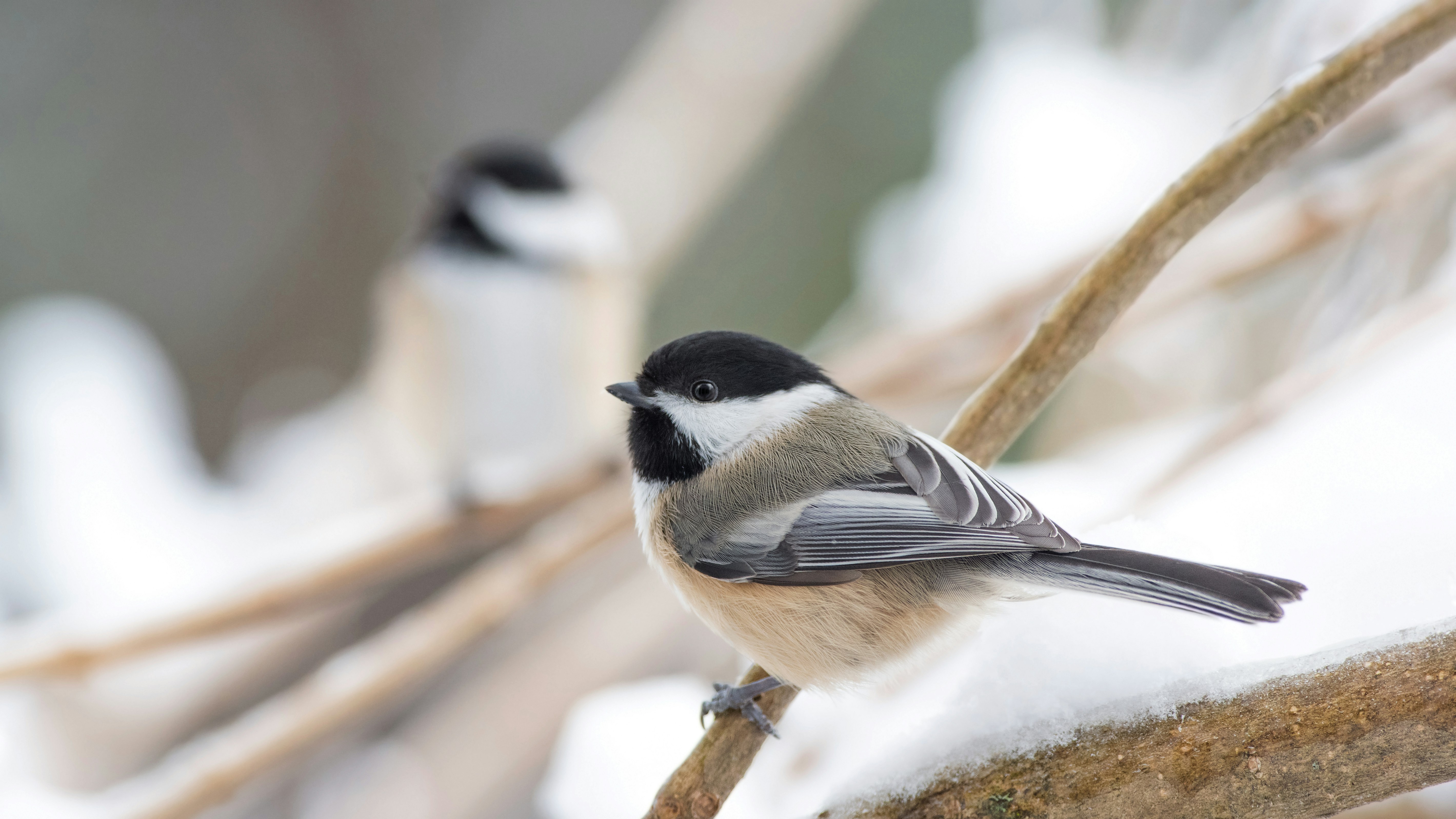
The black-capped chickadee is likely the first bird any Canadian birder learns to identify. It's everywhere, it's bold, and its chick-a-dee-dee-dee call is unmistakable.
Identification
Size: 12–15 cm, about the size of your thumb and forefinger held together.
Field marks:
- Black cap and bib on a white face - the defining feature
- Buff-tan flanks, grey back and wings
- Small, rounded body with a proportionally large head
Could be confused with: Boreal chickadee (browner cap, rustier flanks, mostly found in boreal forest) or mountain chickadee (white eyebrow stripe, western Canada only).
Habitat and range
Found across every Canadian province and territory south of the treeline. Equally at home in mature forest, suburban backyards, and city parks. Non-migratory - they're year-round residents wherever they occur.
Behaviour
Chickadees are cavity nesters that will readily use nest boxes with a 3cm entrance hole. They cache food - hiding thousands of sunflower seeds individually and remembering each location for up to a month.
In winter, they form mixed-species flocks with nuthatches, downy woodpeckers, and brown creepers. Following a chickadee flock in winter woodland is one of the most reliable ways to find other species.
How to attract them
- Black oil sunflower seed - their top choice at feeders
- Suet - especially in winter
- Dead trees - leave standing dead trees if safe; chickadees excavate their own nest cavities
- Nest boxes - mount at 1.5–3m height with a 3cm entrance hole
Chickadees are one of the easiest species to hand-feed. With patience, they'll land on your palm for sunflower seeds - especially in winter when natural food is scarce.