When Do Hummingbirds Arrive in Ontario? (And When to Put Out Your Feeder)
If you spent last summer watching a ruby-throated hummingbird zip around your yard and you're now wondering when to put the feeder back out, you're not alone. Every spring, Ontario birders ask the same question: are they back yet? The answer depends on where in the province you live, and getting the timing right makes all the difference for welcoming these tiny migrants the moment they arrive.
As an Amazon Associate, NorthernPerch.ca earns from qualifying purchases. Links to products may be affiliate links, at no extra cost to you.
Ontario's Only Hummingbird: The Ruby-Throated
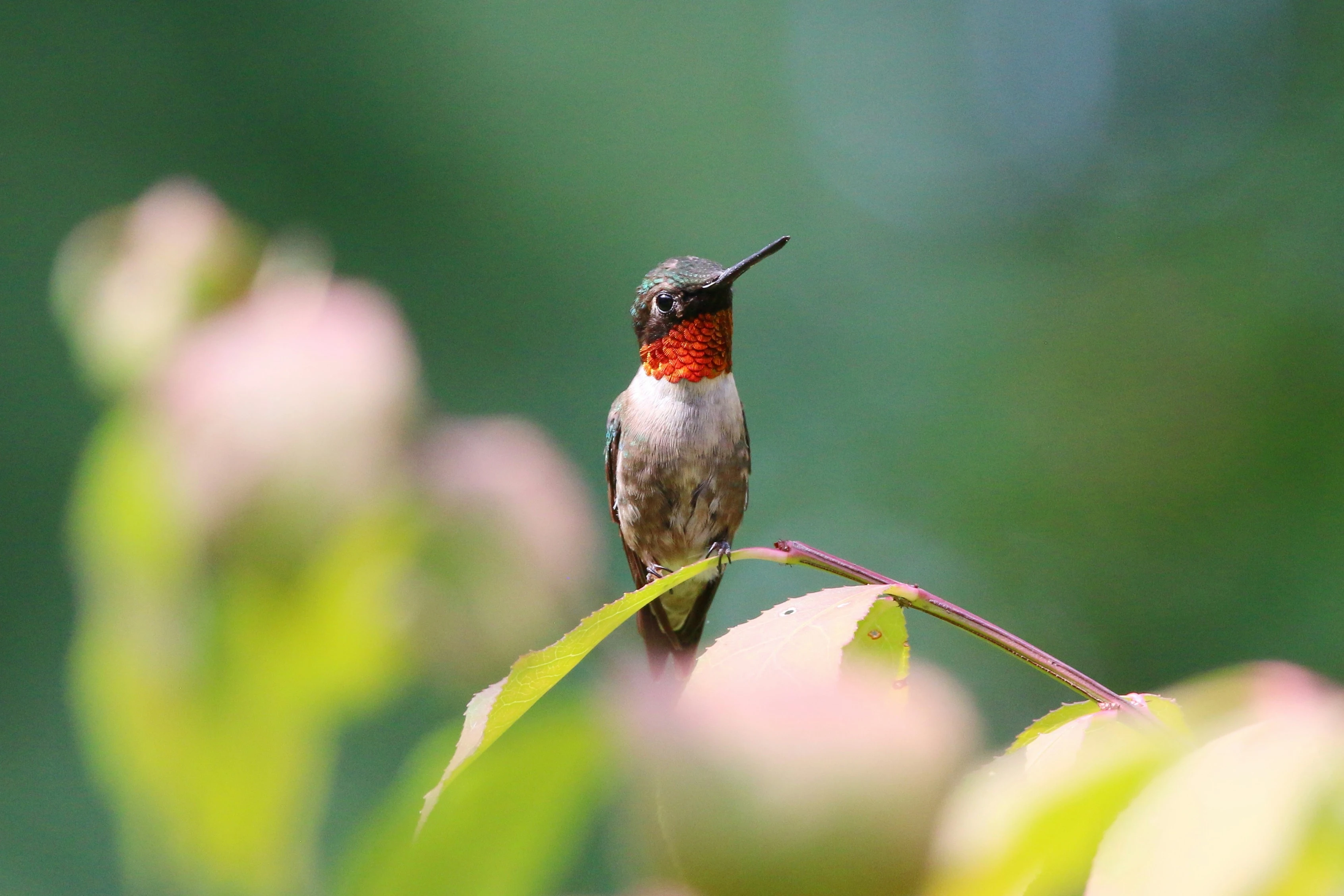
Ontario is home to one breeding hummingbird species: the ruby-throated hummingbird (Archilochus colubris). Males are easy to identify by their iridescent red gorget, which can look dark or even black in certain light. Females are plainer, with a white throat and greenish back. Both are tiny, weighing around 3 grams.
These birds spend their winters in Central America and Mexico, crossing the Gulf of Mexico in a non-stop flight of up to 900 km before working their way north each spring. By the time one lands on your feeder in Ontario, it has already completed one of the more remarkable migrations in the bird world.
For a deeper look at identifying this species in the field, see our ruby-throated hummingbird species guide.
When Do Hummingbirds Arrive in Ontario?
Arrival timing varies across the province, generally tracking the movement of warm weather northward.
Southern Ontario (Windsor, Toronto, Hamilton, Kingston): The first ruby-throated hummingbirds typically appear in early to mid-May. Some years, a scout will turn up in late April in the warmest corners of the southwest, but the main push through southern Ontario runs from May 1 to May 15.
Central Ontario (Muskoka, Haliburton, Georgian Bay): Expect the bulk of arrivals between May 10 and May 20. Cottage country regulars often see their first hummingbird around the Victoria Day long weekend, which makes it a convenient mental anchor for feeder setup.
Northern Ontario (Sudbury, Sault Ste. Marie, Thunder Bay): Hummingbirds reach northern regions in late May, typically between May 20 and June 1. In the far north, June arrivals are not unusual.
These ranges reflect historical averages. Actual arrival dates shift year to year based on weather patterns, and climate change has been gradually nudging early arrivals earlier across the board.
Using eBird to Track Live Arrivals
The best way to know when hummingbirds are actually moving through your area is to check eBird. The Cornell Lab of Ornithology's eBird platform maps recent sightings in real time, so you can see reports from birders within a few kilometres of your home. Search for ruby-throated hummingbird and filter by your region to see how close they are.
When Should You Put Out Your Hummingbird Feeder?
The general rule is: put the feeder out one to two weeks before the expected first arrival date for your area. This gives you a buffer if birds arrive early, and means any scout coming through your yard finds food waiting.
Practical feeder-out dates by region:
- Southern Ontario: Around April 20 to April 25
- Central Ontario: Around May 1 to May 7
- Northern Ontario: Around May 10 to May 15
There is no real downside to putting a feeder out early. Nectar that sits unused simply needs to be refreshed when birds arrive. Putting a feeder out late, though, means you may miss the first wave entirely.
A clean feeder with fresh nectar is far more important than the exact date. If you're pulling a feeder out of storage, wash it thoroughly before filling it. Old dried nectar and mould will drive birds away.
How to Make Hummingbird Nectar
The correct nectar recipe is simple: one part white granulated sugar dissolved in four parts water. That ratio closely matches the sucrose concentration in natural flower nectar.
A few things to avoid:
- Red food colouring. There is no evidence it attracts hummingbirds, and some research suggests it may be harmful. Most modern feeders have red components that do the attracting on their own.
- Honey. It ferments quickly and can cause a fatal fungal infection in hummingbirds.
- Artificial sweeteners. No nutritional value; useless at best, harmful at worst.
- Brown sugar or raw sugar. These contain molasses and other compounds that are not good for hummingbirds.
Plain white sugar and water. That's it.
Change the nectar every two to three days in warm weather, more often during heat waves. Nectar ferments fast when temperatures climb above 25°C, and fermented nectar can make hummingbirds sick.
Choosing a Feeder
Any clean, red-accented feeder with multiple feeding ports will attract ruby-throated hummingbirds. A few features worth looking for:
Wide mouth or saucer-style design. These are significantly easier to clean than narrow-necked bottle-style feeders, and cleaning ease is probably the most important practical consideration.
Ant moat. An ant moat sits above the feeder and holds a small reservoir of water that ants cannot cross. Ants are relentless about getting into feeders, and a moat is the most effective solution short of applying a sticky barrier to the hanger.
Bee guards. Small mesh or plastic guards over the feeding ports let hummingbirds reach the nectar while keeping bees from crawling inside. Worth having if wasps are a problem in your yard.
The Aspects HummZinger Excel 16 oz Hanging Hummingbird Feeder is a well-regarded saucer-style option that ticks all of these boxes and is straightforward to disassemble and clean. The Perky-Pet 8 oz Hummingbird Feeder is a smaller, more affordable option that works well for those just getting started.
If you want to skip making your own nectar, Kaytee Hummingbird Ready to Use Electro Nectar is a convenient ready-to-pour option, though plain white sugar is cheaper and just as effective.
For a full breakdown of the top feeders available in Canada, see our best hummingbird feeders in Canada buyer's guide.
When Do Hummingbirds Leave Ontario?
Ruby-throated hummingbirds begin moving south in late summer. Adult males typically depart first, with females and juveniles following over the following weeks.
In southern Ontario, most hummingbirds are gone by mid-September, though stragglers can occasionally linger into October. Central and northern Ontario sees departures a week or two earlier, with most birds gone by early September.
Leave your feeder up until at least two weeks after you see your last hummingbird. A common myth holds that leaving feeders up in fall will prevent hummingbirds from migrating. This is not true. Migration is triggered by changes in day length, not food availability. A late-season feeder provides a vital energy stop for southbound migrants, including birds passing through from farther north.
Do Hummingbirds Return to the Same Yard?
Yes, and fairly reliably. Hummingbirds have excellent spatial memory and will return to sites where they found food in previous years. If you hosted a hummingbird last summer, there's a good chance the same individual, or its offspring, will return.
This is worth keeping in mind when you're deciding whether to bother setting up a feeder in a new yard. One good season with reliable nectar and a nearby flower garden is often enough to establish your yard as a known stop on a bird's annual route.
Quick Reference: Ontario Hummingbird Timing
| Region | Feeder Out | First Arrivals | Last Sightings |
|---|---|---|---|
| Southern Ontario | April 20-25 | Early to mid-May | Mid-September |
| Central Ontario | May 1-7 | May 10-20 | Early September |
| Northern Ontario | May 10-15 | May 20 to June 1 | Late August |
Frequently Asked Questions
When should I put out my hummingbird feeder in Toronto? Aim for around April 20 to April 25. First arrivals in the Toronto area typically show up between May 1 and May 10, so having the feeder up a couple of weeks early gives you a buffer. Check eBird for recent local sightings as spring progresses.
How do I know when hummingbirds are back in my area? The most reliable method is eBird. Search for ruby-throated hummingbird in your region and look at recent reports. Local birding Facebook groups and Ontario birding forums are also good sources of real-time arrival news each spring.
What happens if I put my feeder out too early? Nothing problematic. Nectar that sits unused simply needs to be dumped and replaced with a fresh batch when birds arrive. The only cost is a small amount of sugar.
Should I take my hummingbird feeder in at night? Not necessary in most of Ontario. If temperatures are regularly dropping below 0°C in early spring or late fall, bringing the feeder inside overnight will keep the nectar from freezing and save you from needing to replace it in the morning.
Can I attract hummingbirds without a feeder? Yes. Native flowering plants are actually the most natural and reliable attractant. In Ontario, tubular red and orange flowers work especially well: native trumpet honeysuckle (Lonicera sempervirens), bee balm (Monarda), and cardinal flower (Lobelia cardinalis) are all excellent choices and benefit other pollinators as well.
Conclusion
For most of southern Ontario, the last week of April is when to have your feeder clean and filled. Farther north, push that date to early May. Keep the nectar fresh, skip the red dye, and leave the feeder up well into September. A little consistency from year to year is often enough to turn your yard into a reliable stop on a hummingbird's annual route. If you haven't picked a feeder yet, our best hummingbird feeders in Canada guide covers the top options with Canadian availability confirmed. For broader backyard birding tips, see our guide on how to attract more birds to your backyard in Ontario. And if you want to do more birdwatching away from the feeder, our guide to the best binoculars for beginner birders in Canada will help you find the right optics for the field.