As an Amazon Associate, NorthernPerch.ca earns from qualifying purchases.
If you've been trying to attract goldfinches to your yard without much luck, the feeder is almost always the problem. Finches are picky. They want Nyjer (thistle) seed, they want small ports sized for their bills, and they want a feeder they can cling to comfortably. Put out the wrong setup and they'll ignore it entirely.
This guide covers the best finch feeders available on Amazon.ca right now, from a simple sock feeder you can grab for under $30 to a squirrel-proof option built to last. If you're just getting started with backyard birding, you might also want to read our broader guide on how to attract more birds to your backyard in Ontario.
What Finches Actually Want
Before getting into specific products, it helps to understand what you're working with.
The finches you're most likely to attract in Canada are American Goldfinches, Pine Siskins, Common Redpolls, and House Finches. All of them will readily come to Nyjer seed, which is a tiny, oil-rich seed sometimes sold as thistle. It's specifically designed for small-billed finches and has the added benefit of being unappealing to larger birds like starlings and house sparrows.
The feeder style matters too. Finches are agile and can cling upside down, so tube feeders and mesh feeders both work well. Sock feeders (soft mesh bags) are the most natural feeding surface for them. What doesn't work well is a large hopper-style feeder with big ports -- the seed spills, goes stale, and attracts the wrong birds.
One practical note: Nyjer seed has a short shelf life once opened. Buy in quantities you'll use within a few weeks, and if you notice finches abandoning a feeder, try refreshing the seed before assuming the location is the issue.
The Best Finch Feeders on Amazon.ca
Kaytee Finch Station
Check current price on Amazon.ca
The Kaytee Finch Station is a soft mesh sock feeder, and it's one of the most effective options for attracting goldfinches quickly. The mesh surface lets finches cling anywhere on the feeder, which mimics how they feed on wild plants. There's no perch to fight over, so multiple birds can feed at the same time.
It's the most affordable option in this guide at around $25, which makes it a good starting point if you're not sure whether finches visit your yard yet. The trade-off is durability -- sock feeders wear out faster than rigid feeders and need replacing after a season or two. But at this price point, that's a reasonable compromise.
Best for: First-time finch feeders, anyone wanting to attract goldfinches quickly on a budget.
iBorn Nyjer and Thistle Tube Feeder
Check current price on Amazon.ca
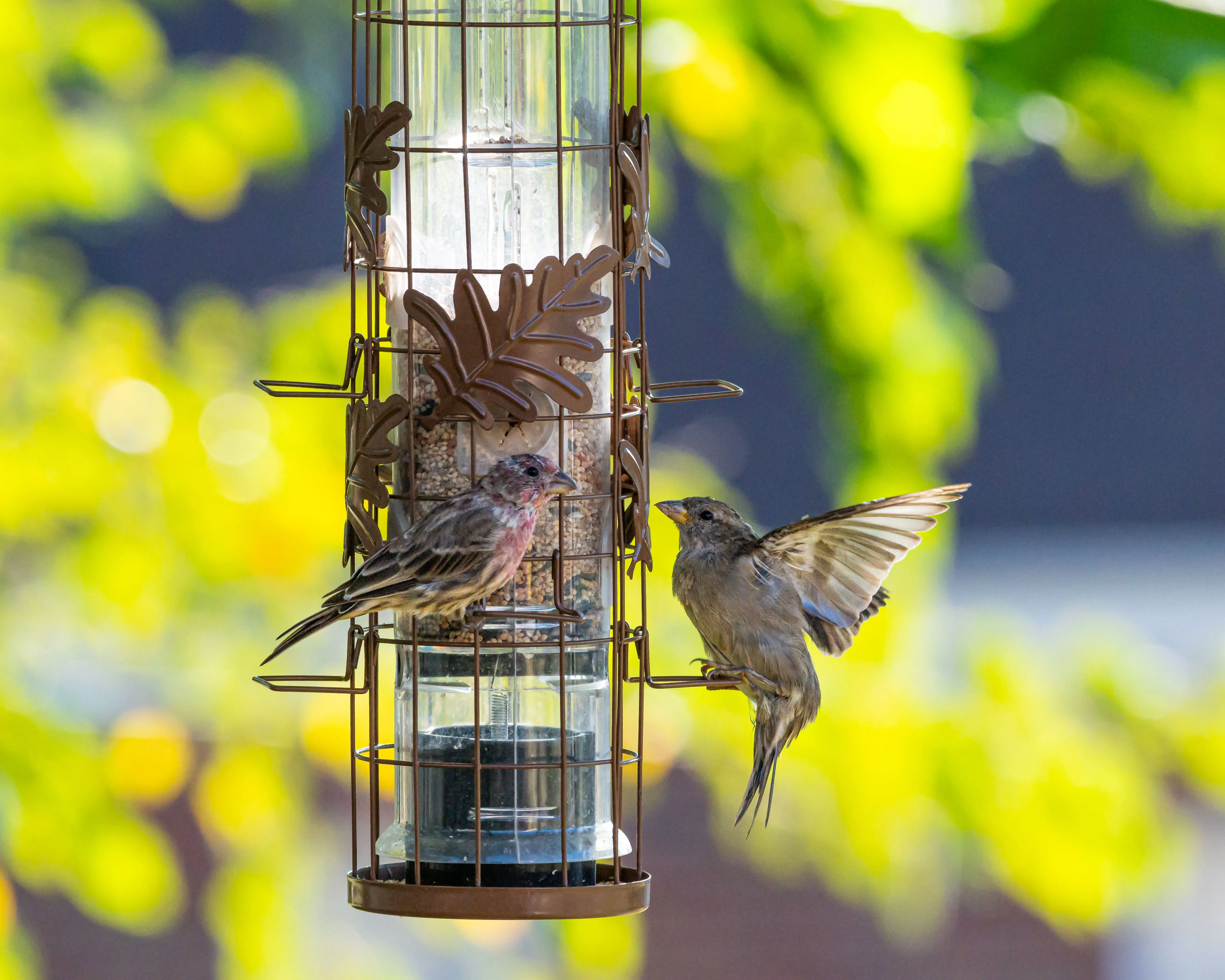
This 12-port metal tube feeder holds a good volume of seed and can accommodate several birds at once. The metal construction holds up better outdoors than plastic, which tends to crack after a Canadian winter or two. The ports are sized correctly for Nyjer seed, and the perches are comfortable for small finches without being so large that bigger birds can easily take over.
At around $27, it's a slight step up from the sock feeder in terms of build quality and capacity. It's also easier to fill and clean than a sock, which matters if you're maintaining multiple feeders in your yard.
Best for: Yards with regular finch activity, anyone who wants a higher-capacity option without spending a lot.
LJYIDAMY Metal Mesh Feeder
Check current price on Amazon.ca
The LJYIDAMY mesh feeder splits the difference between a sock feeder and a rigid tube. The metal mesh cylinder holds 2.5 lbs of Nyjer seed -- significantly more than the sock options -- while still giving finches the full-surface cling they prefer. The all-metal construction means it'll survive seasons that would destroy a plastic feeder.
At around $30, it's the best value for anyone who gets consistent finch traffic and wants a feeder that lasts. The capacity also means less frequent refilling, which is a practical advantage if you're running several feeders at once.
Best for: Established backyards with regular finch visits, anyone who wants a durable long-term feeder.
Brome Squirrel Buster Standard
Check current price on Amazon.ca
If squirrels are a problem in your yard, the Brome Squirrel Buster Standard is the only feeder in this guide worth considering. It uses a weight-activated shroud that closes off the seed ports when anything heavier than a small bird lands on it. Squirrels quickly learn it doesn't work for them and move on.
The trade-off is price -- at around $58, it's roughly double the cost of the other options here. But it's Canadian-made, comes with a lifetime guarantee, and genuinely does what it claims. If you've gone through cheaper feeders after squirrel damage, the Squirrel Buster tends to pay for itself.
It's primarily designed for mixed seed and sunflower, but works well with Nyjer too. Worth noting that it attracts a wider range of birds than a dedicated Nyjer feeder, so you may see chickadees and nuthatches in addition to finches. For more on attracting chickadees specifically, see our Black-capped Chickadee species guide.
Best for: Anyone dealing with squirrel pressure, yards where a multi-species feeder makes more sense than a dedicated Nyjer setup.
Which Feeder Should You Buy?
If you're just starting out and want to see whether finches visit your yard, get the Kaytee sock feeder. It's cheap, effective, and gives you a quick answer.
If you already know finches are around and want something more durable, the LJYIDAMY mesh feeder is the best value for money. The capacity and metal construction make it the practical choice for most backyards.
If squirrels are destroying your feeders, spend the extra money on the Brome Squirrel Buster. It's the only long-term solution that actually works.
A Few Tips Before You Set Up
Location matters more than most people think. Finches prefer feeders with some nearby cover -- a tree or shrub within a few metres gives them a perch to wait on and a place to retreat if they're startled. An open feeder hung in the middle of the yard with nothing nearby will get less traffic.
Give it time. If you've just put out a new feeder, don't expect results in the first few days. Finches need to discover it, and that can take a week or two. Patience is the most underrated part of backyard birding.
Keep it clean. Nyjer seed can clump and go mouldy in wet weather. A quick rinse every few weeks -- more often in rainy periods -- keeps the feeder working properly and protects the birds visiting it.
For a broader look at setting up your backyard for birds, including feeder placement, native plants, and water sources, see our full guide on attracting birds to your backyard in Ontario. And if you're also thinking about hummingbird feeders for the season, we've covered those in detail in our best hummingbird feeders in Canada guide.